
Hard conversations, in public – our dialogue series at Warsaw's Museum of Modern Art
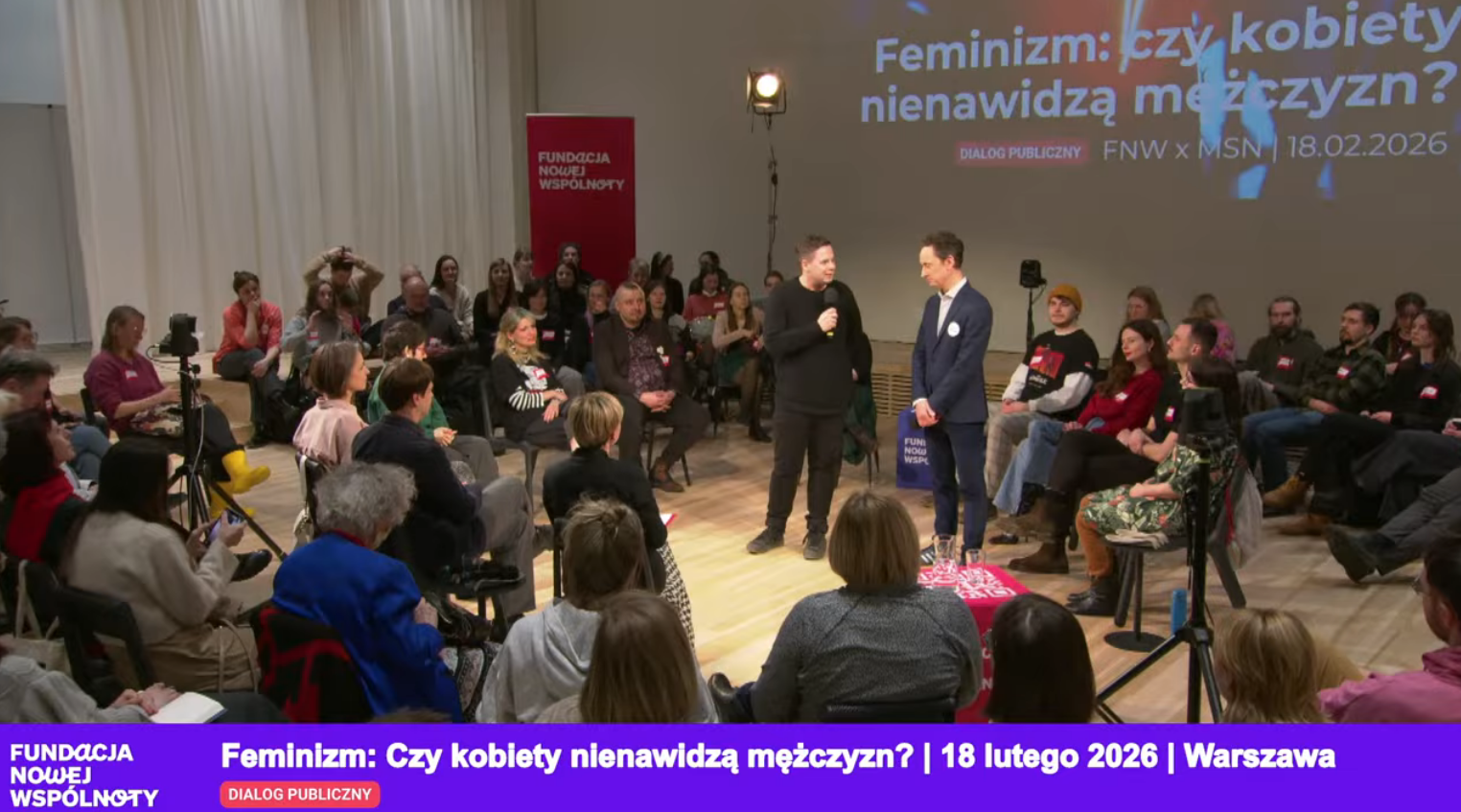
The New Community Foundation (NCF) is a Polish non-profit that works to reduce polarization by getting people who disagree to sit down and actually talk. Most of our dialogues happen in small, closed rooms, in towns and villages across the country. In late 2025 we tried something we had wanted to do for years: hold them in public, on a stage, in front of a live audience, with live broadcasting on social media.
Our partner was the Museum of Modern Art in Warsaw (MSN) – the city's new landmark on Plac Defilad. The building features an open-access auditorium, an ideal place for civic conversations. Each evening was filmed in broadcast quality and the third dialogue, on feminism, is available in full on our YouTube channel (in Polish). The project was supported by the Open Society Foundations.
Three conversations
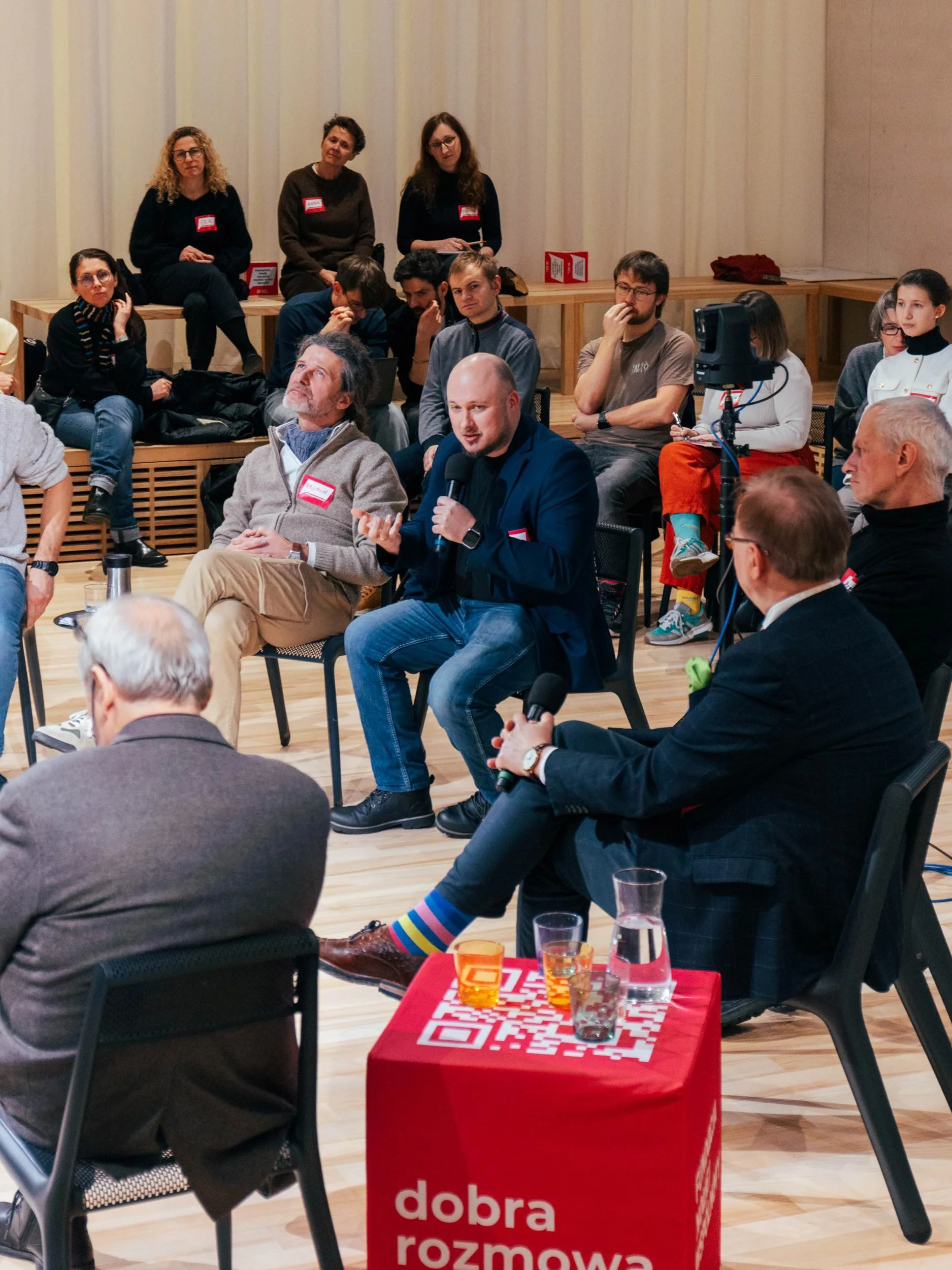
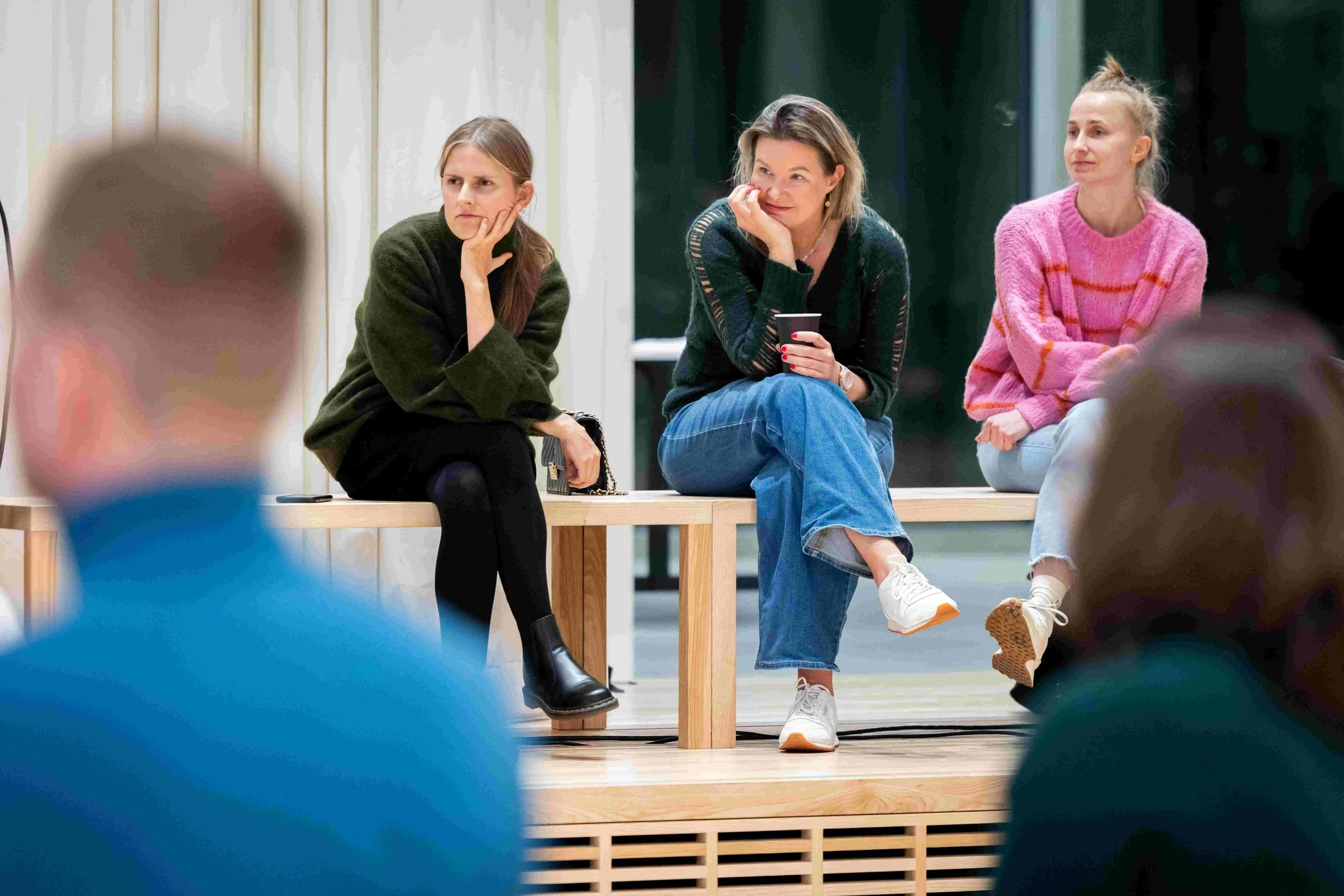
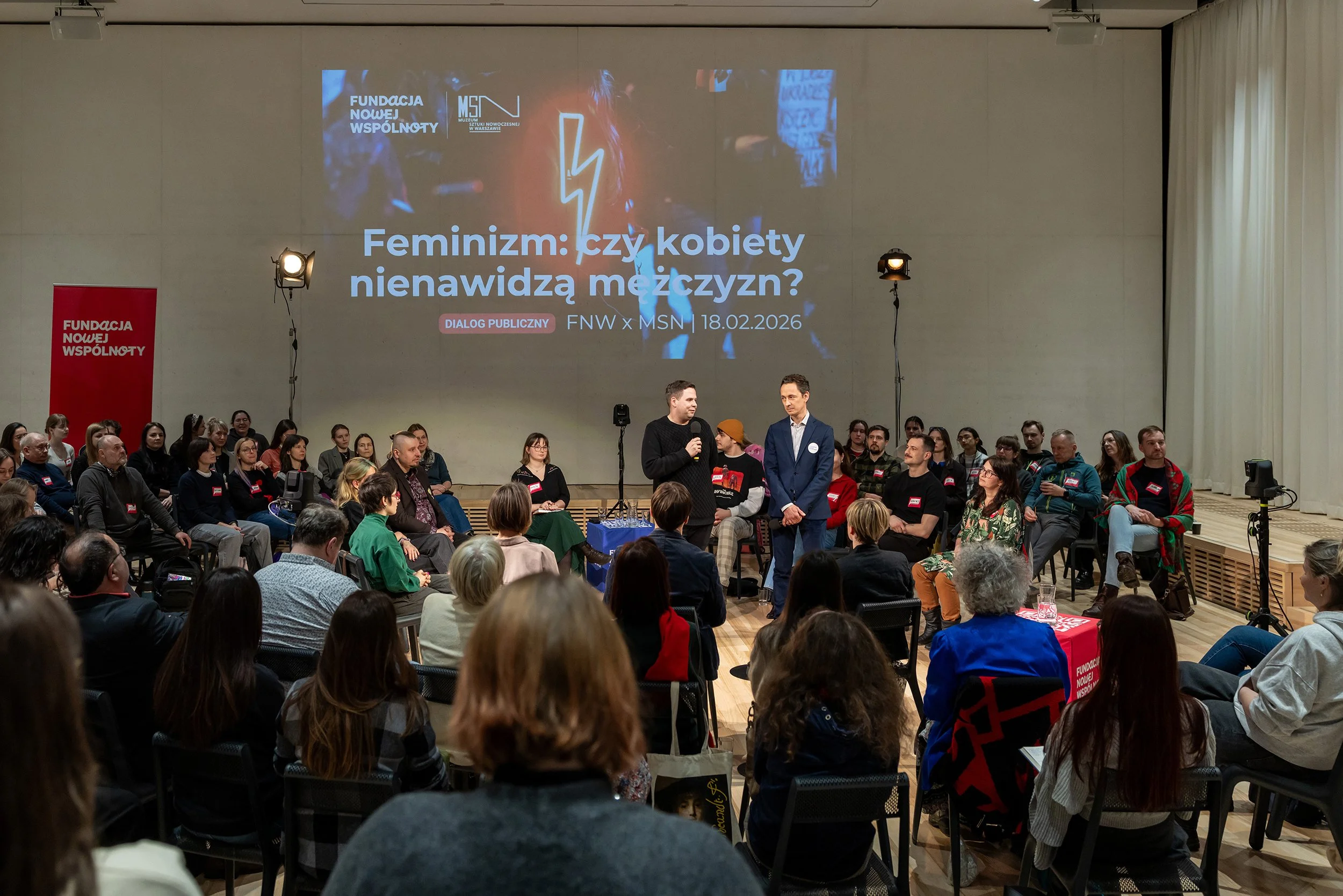
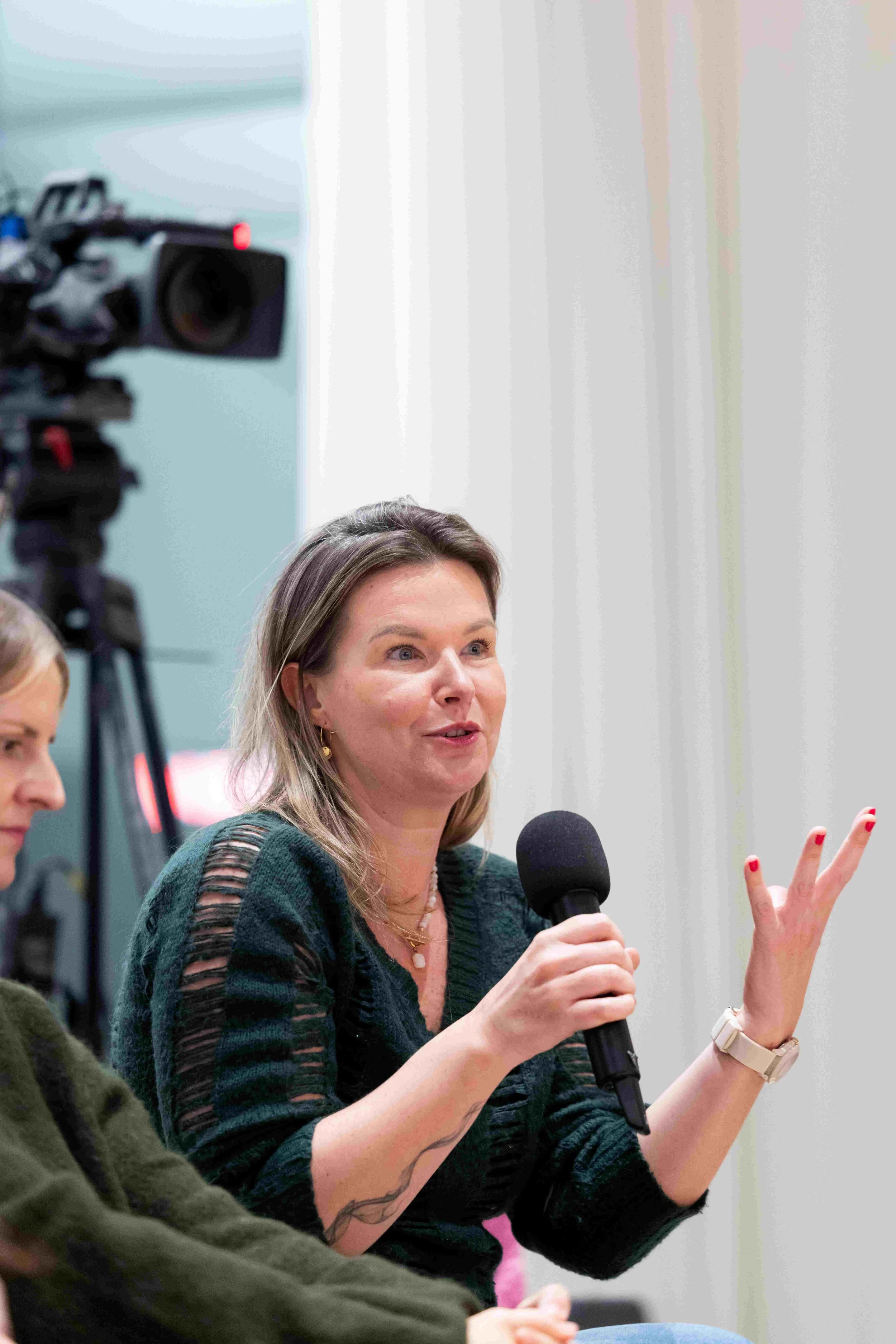
In the first, on the fear of war (October 2025), participants talked about how Russia's ongoing invasion of Ukraine has seeped into daily life in Poland – the low-level anxiety, the debate over rearmament, and the uncomfortable question of who exactly should defend the country if it came to that. In "Migrants and Poles: on what terms should we live together?" (November 2025) they examined how Poles experience the growing diversity around them, how migrants themselves feel living here, and the fault line between hospitality and hostility. And in "Feminism: do women hate men?" (February 2026) they took on women's rights, men's power, and the raw emotions that surface whenever the social order is up for renegotiation. The last dialogue had a live audience of 100+ people.
Why the format matters
What makes these evenings work is the structure, and it is deliberately not a debate – no one is there to win. 10 participants begin by simply introducing themselves and stating their view. Then they question one another. After a break, each person tells the personal story that shaped how they think – the part that tends to dissolve caricatures. And the evening closes not on a vote or a verdict, but on a round we call "what do we have in common," in which participants name the things in their opponents' words that they recognize in themselves.
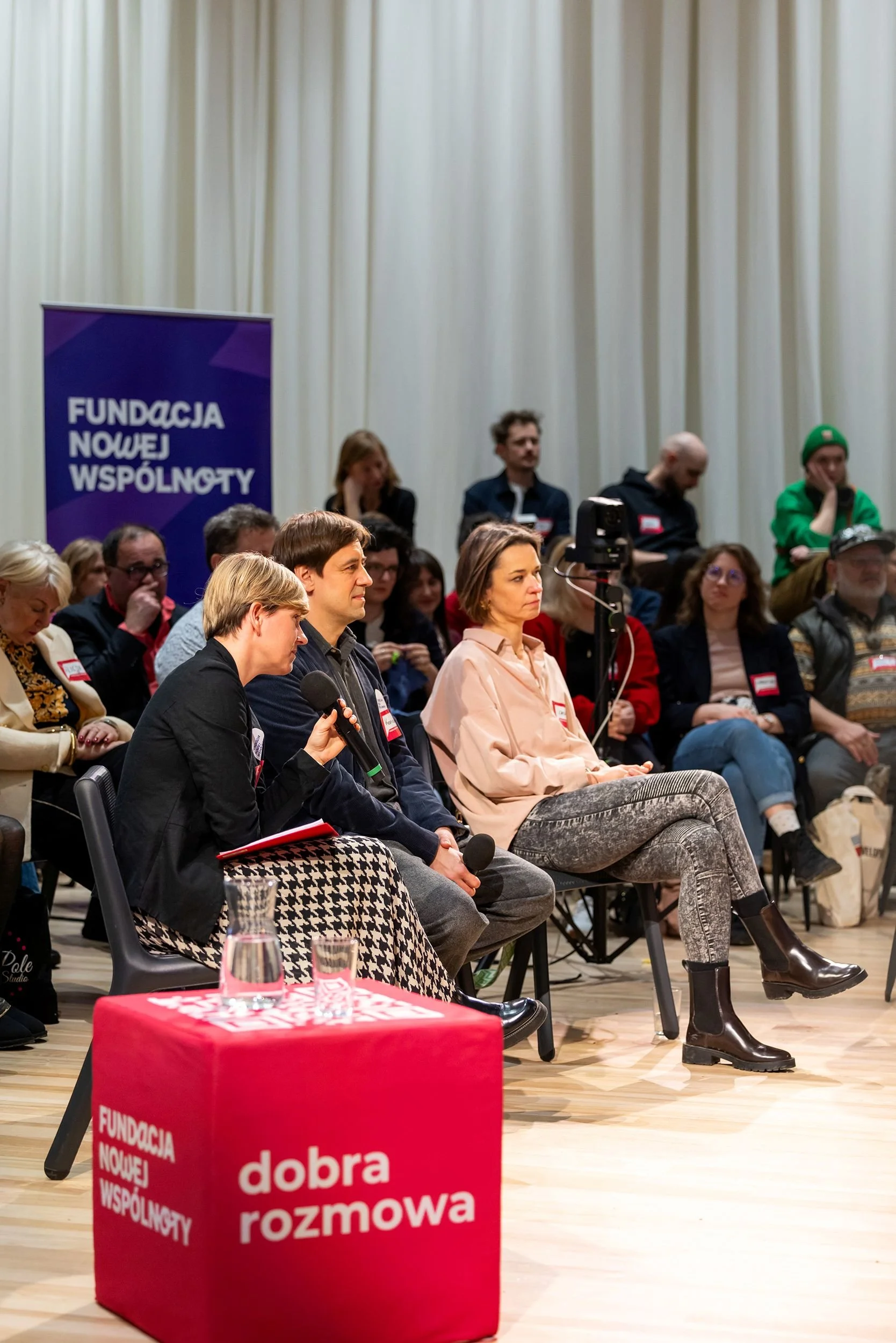
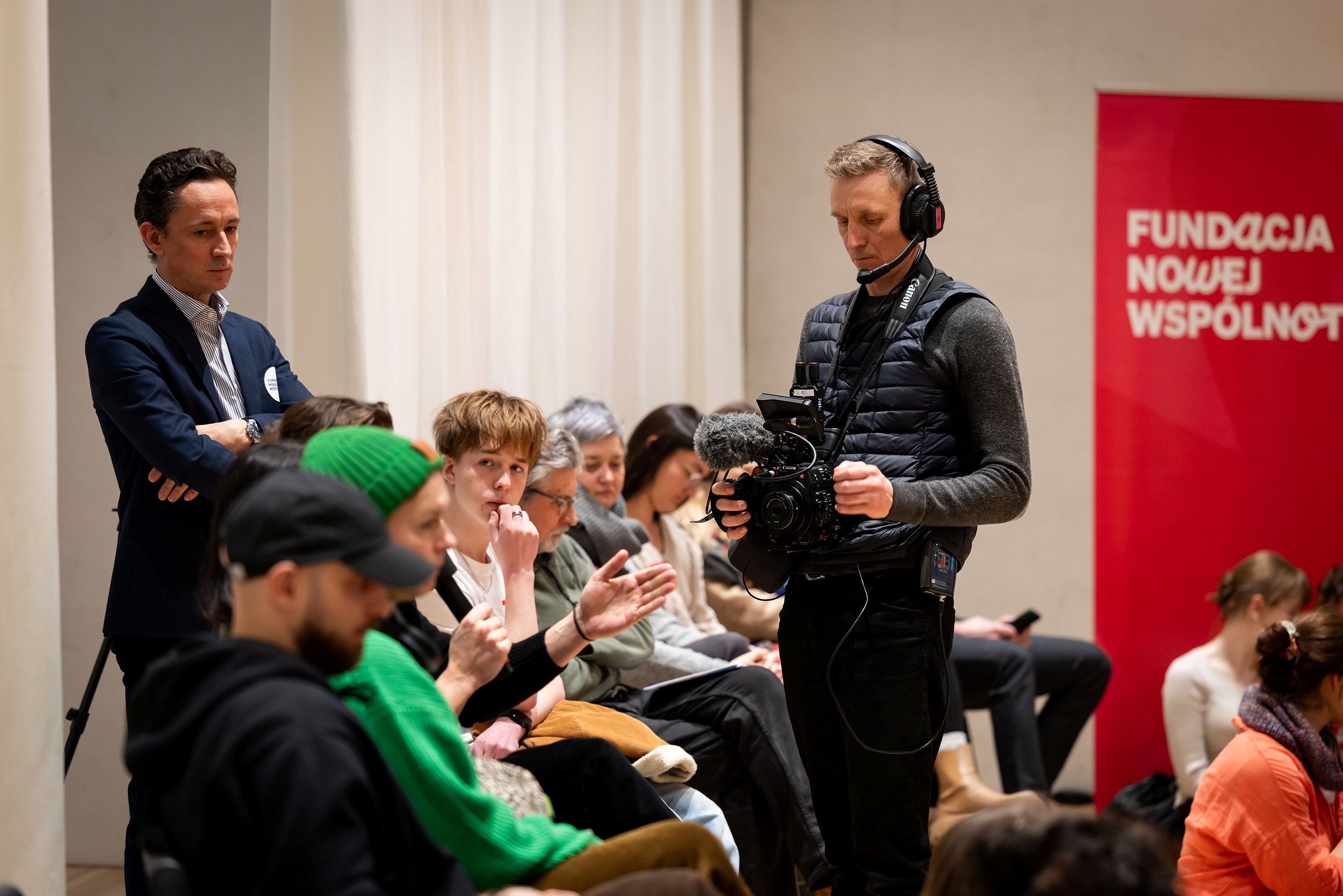
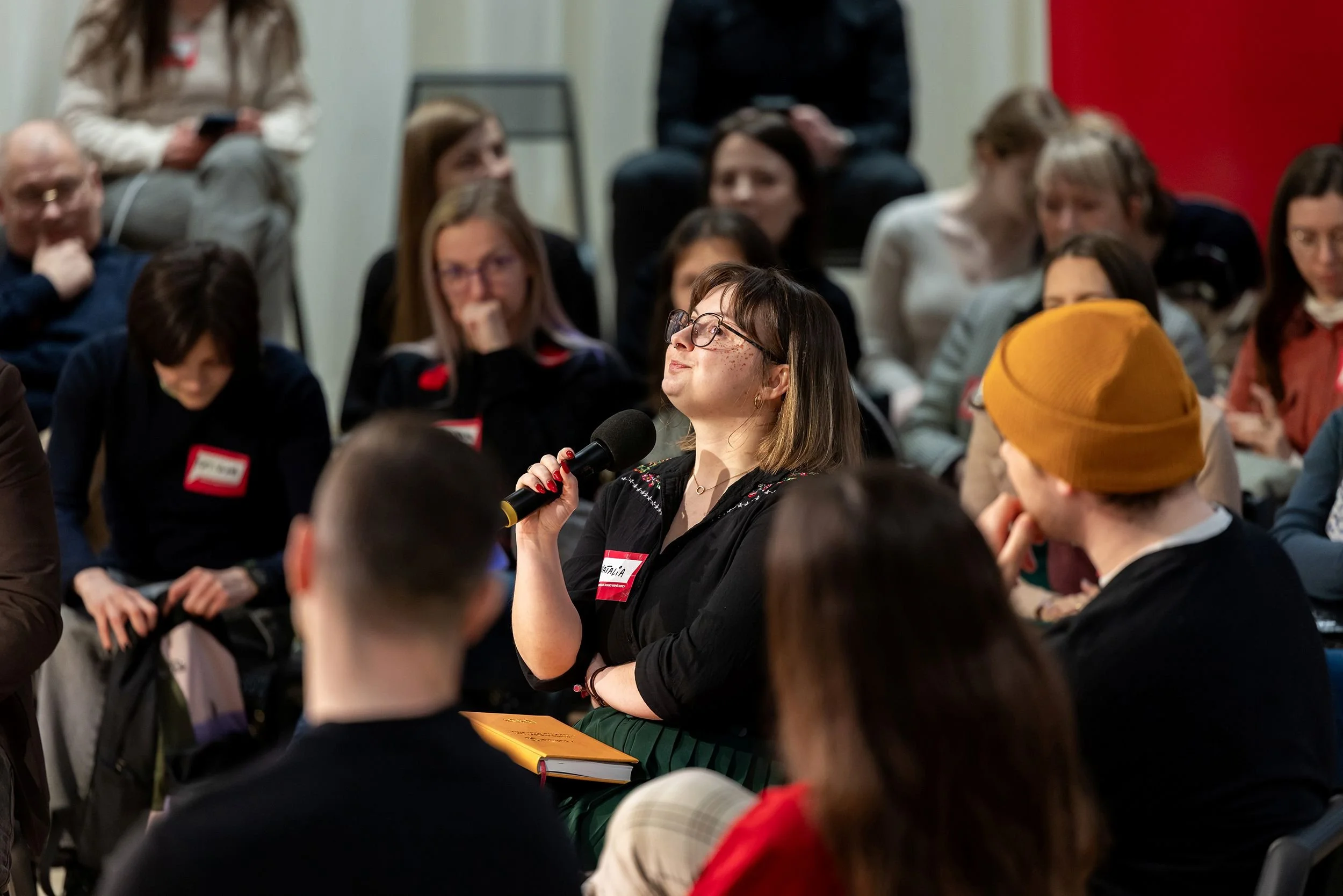
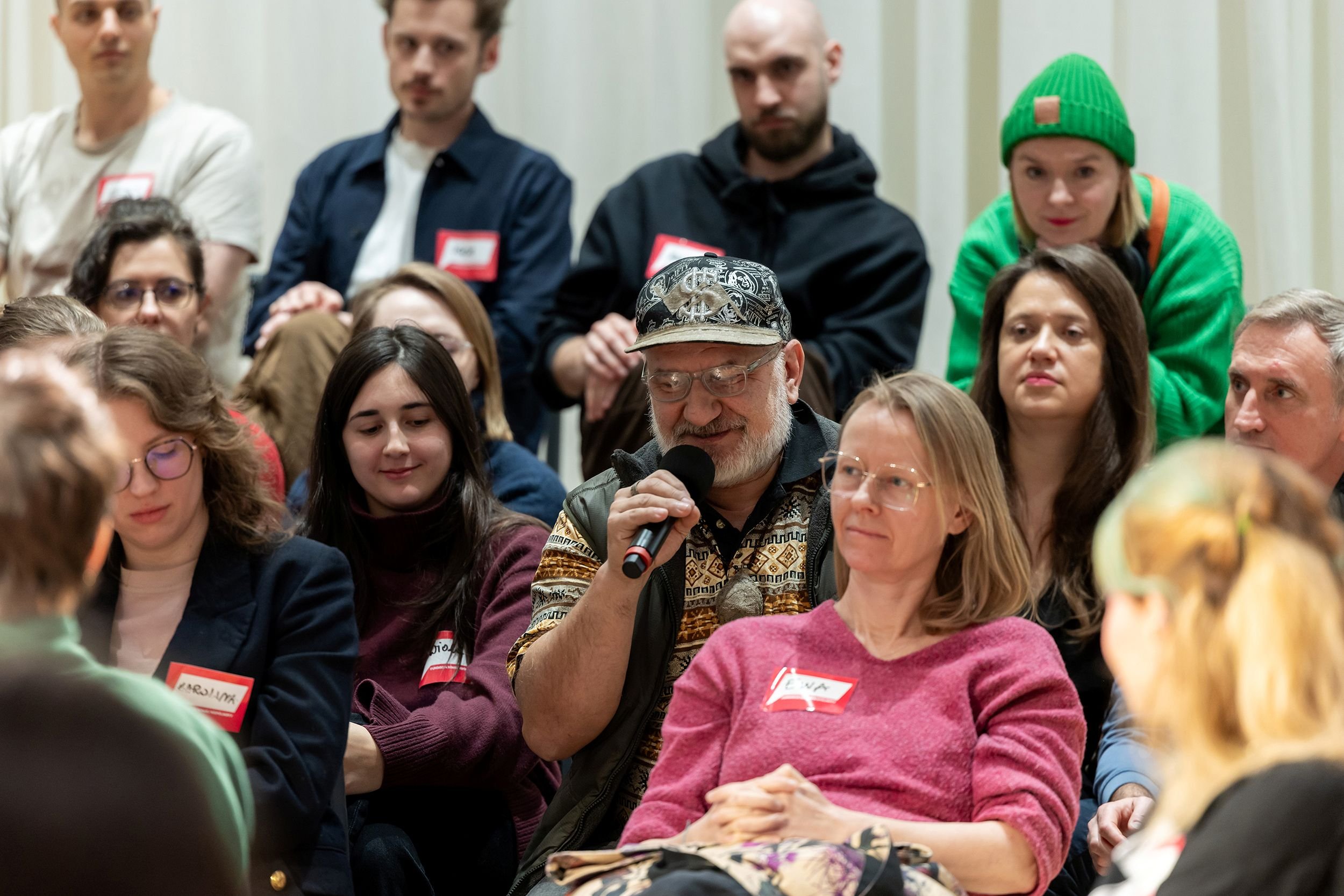
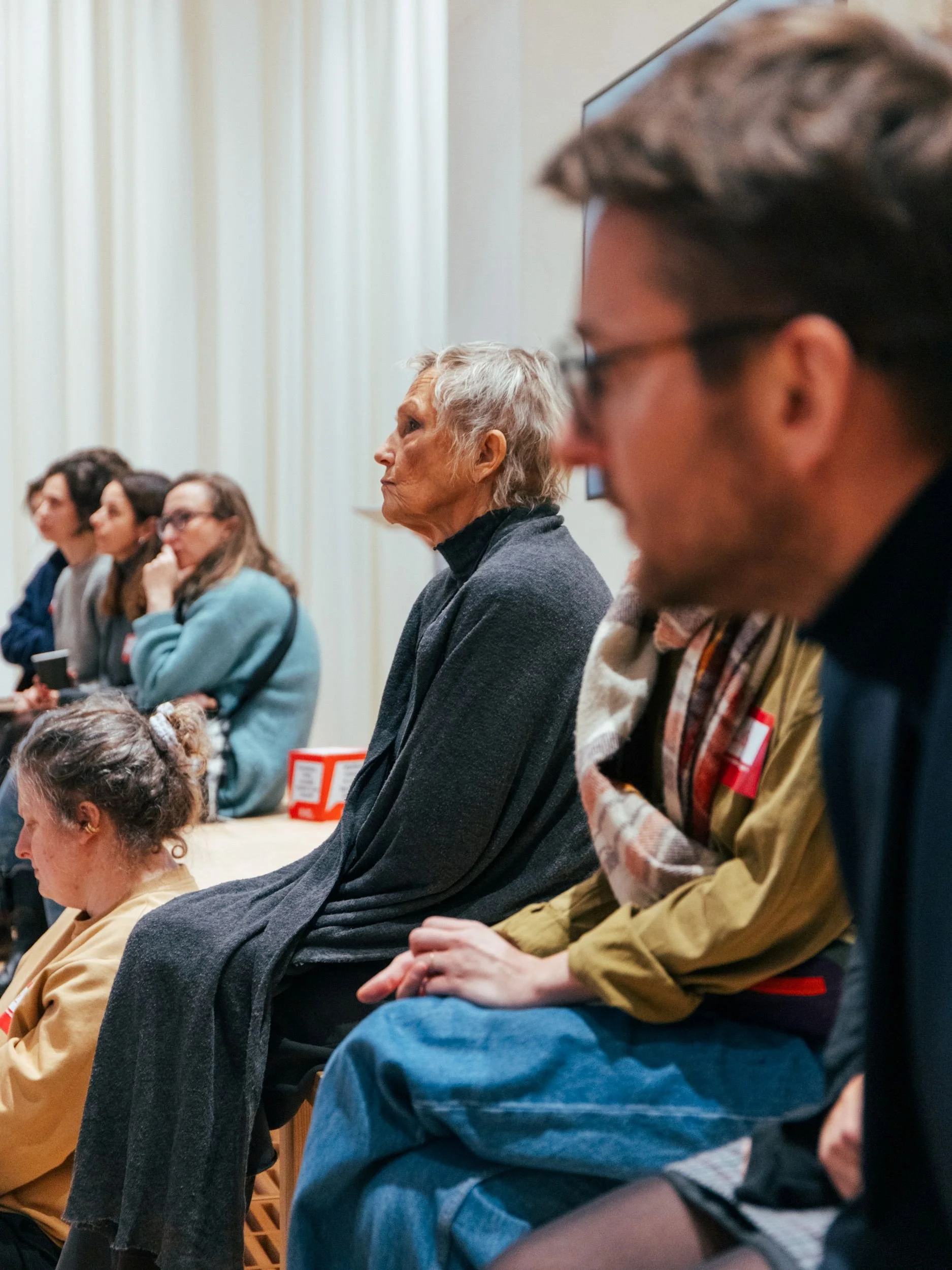
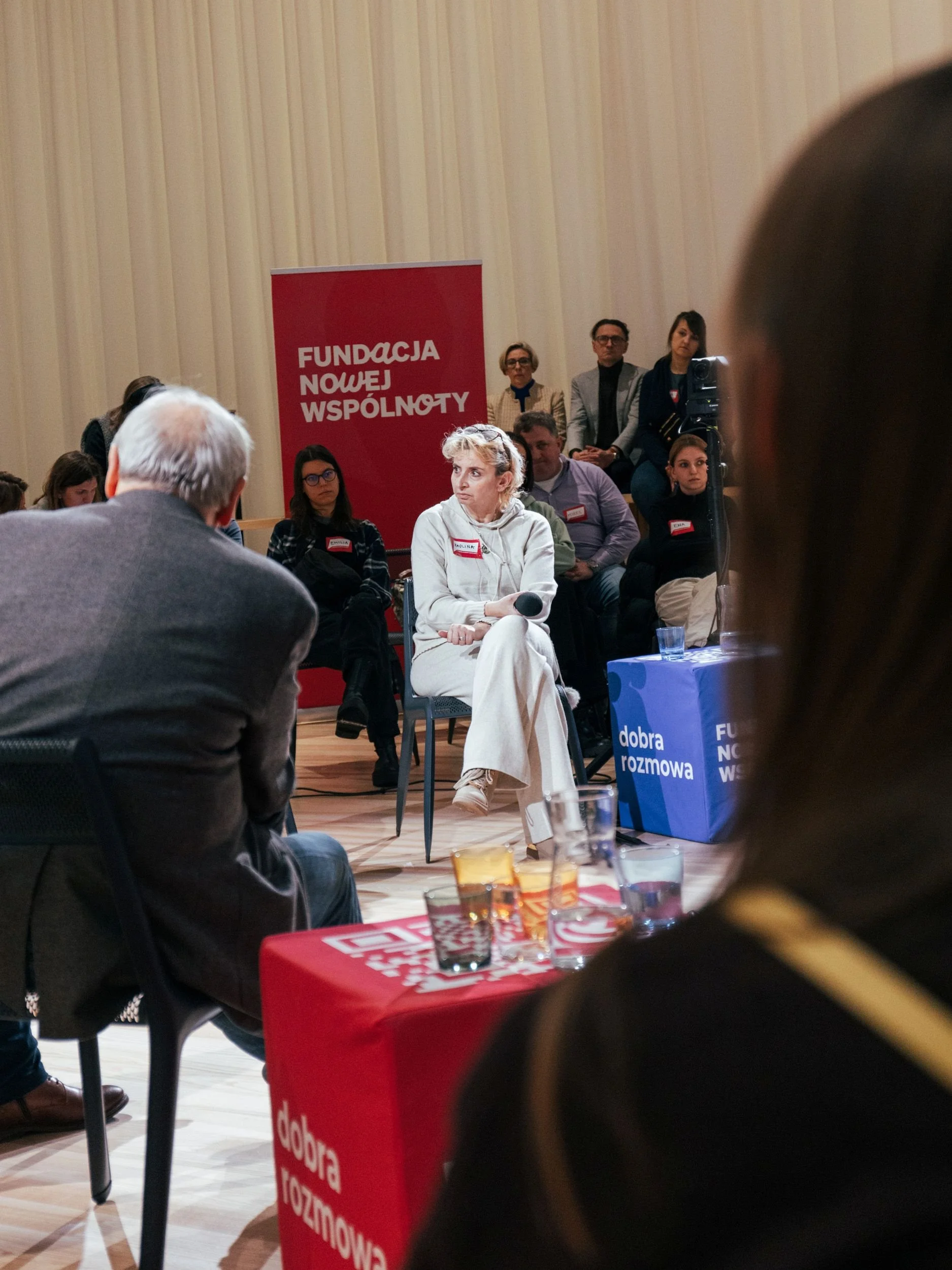
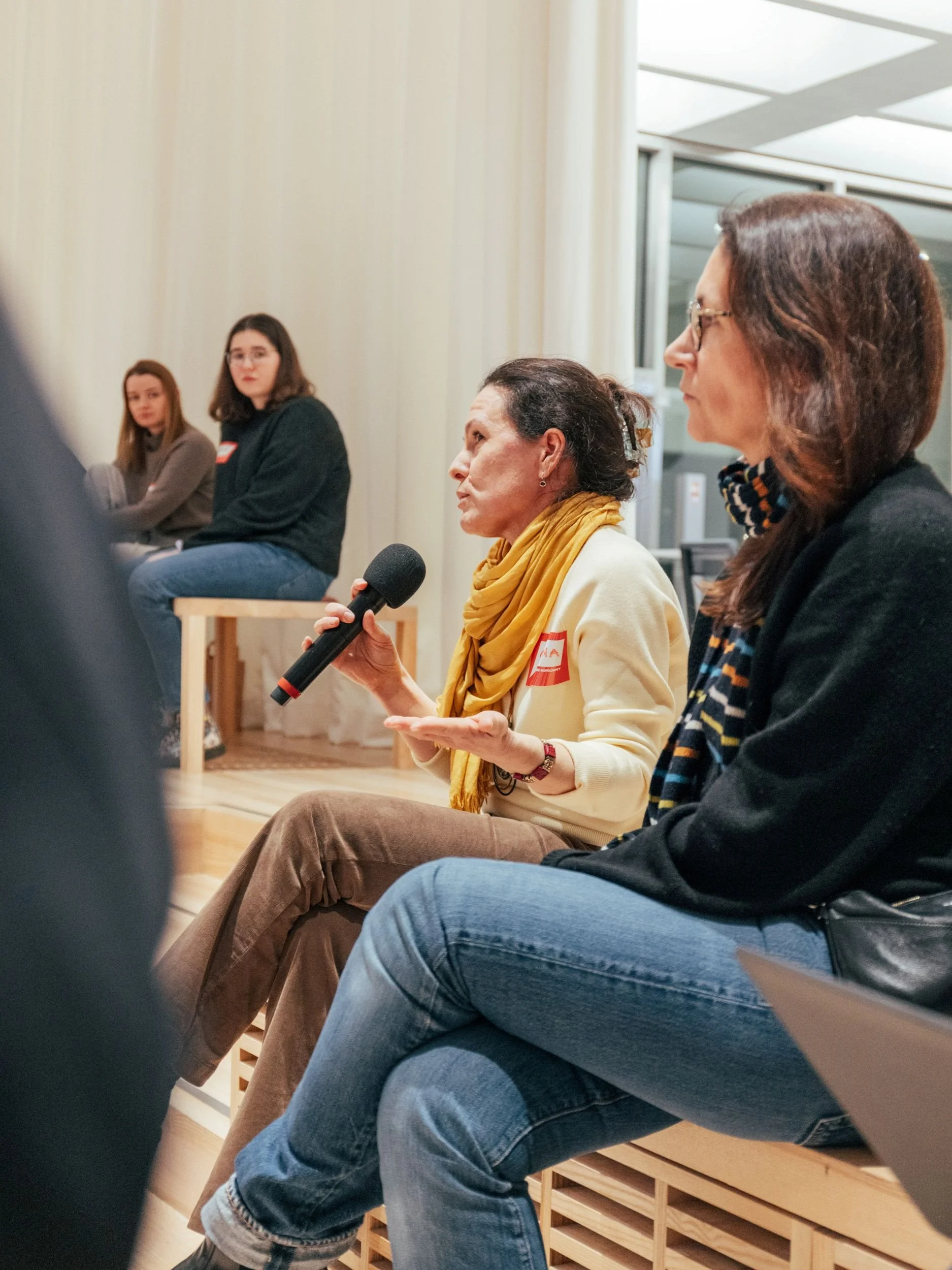
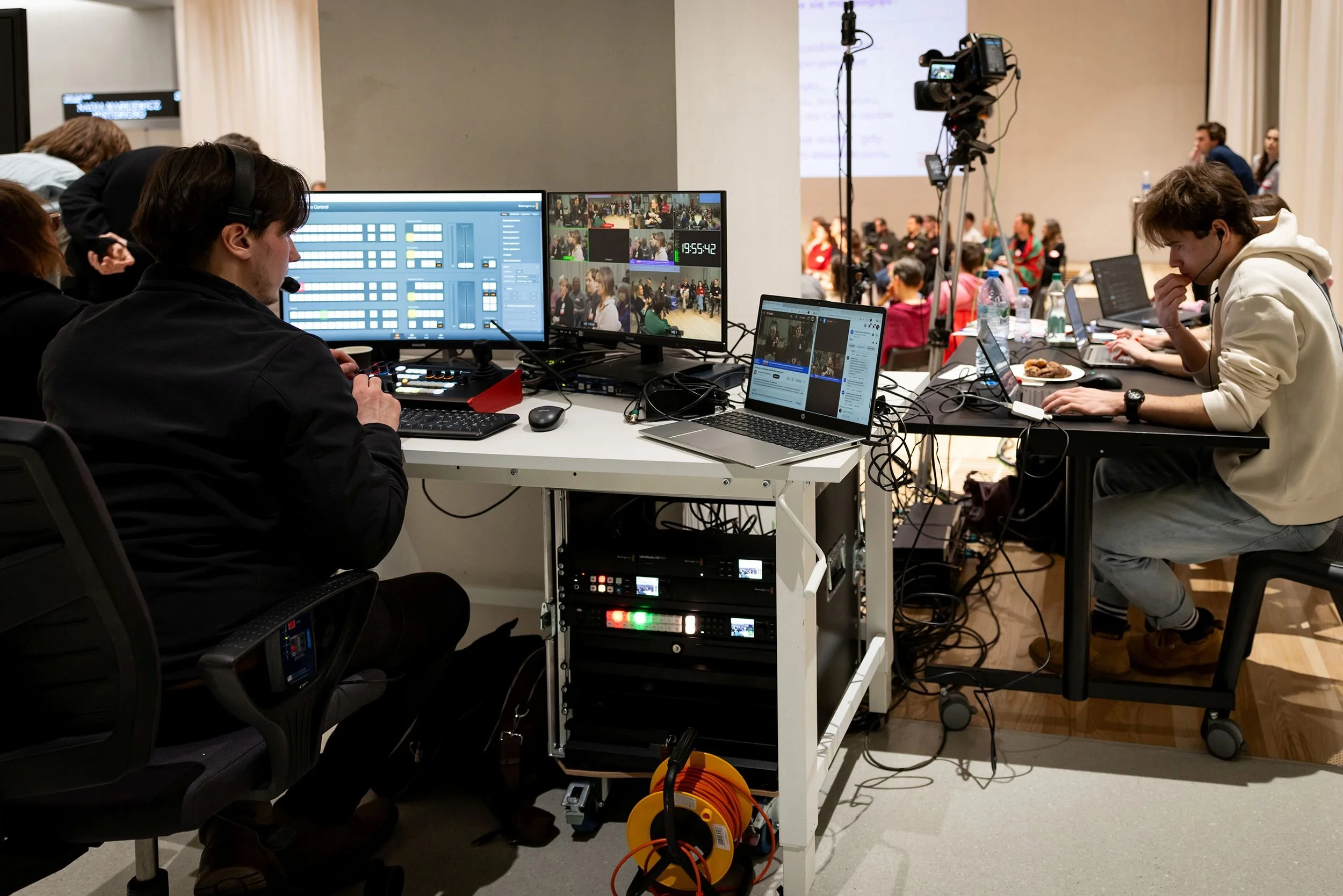
Doing this on a stage, in front of an audience and multiple cameras, makes it a civic experience for the digital age. It lets thousands of people who will never sit in that circle watch what a real conversation across a deep divide actually looks like – live proof that you can disagree sharply about war, migration, or gender and still walk out seeing the other side as people rather than positions. That, in miniature, is the case for everything we do.
The series continues in autumn 2026.
