
2025 in review: reaching beyond cities, training dialogue practitioners, researching polarization
Local Dialogues across Poland
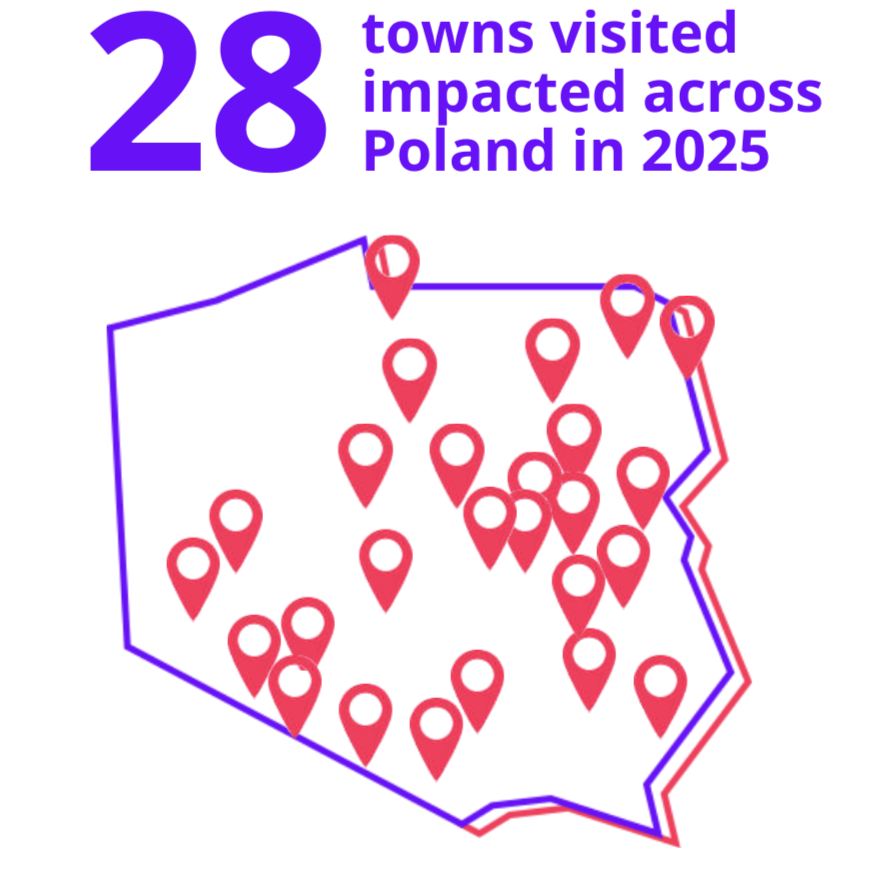
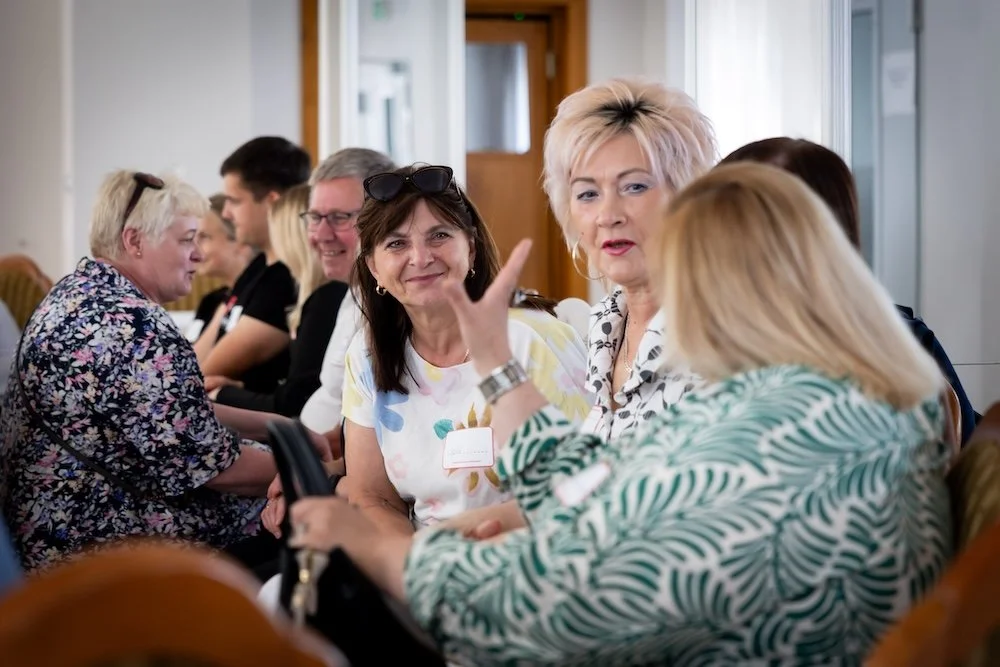
In 2025, we took dialogue beyond the major cities. Through several projects, we visited a total of 28 towns and municipalities, organizing dialogues for local communities in each of them.
We worked in places affected by flooding in Lower Silesia, in eastern regions of Poland that are coming to terms with immigration, and in municipalities facing climate change and the construction of wind farms.
In Łęczna, a mining town in Eastern Poland, we carried out a social research study and an in-depth series of dialogues with residents, focusing on the future of their community after the closure of the coal mine.

Local Dialogue Course
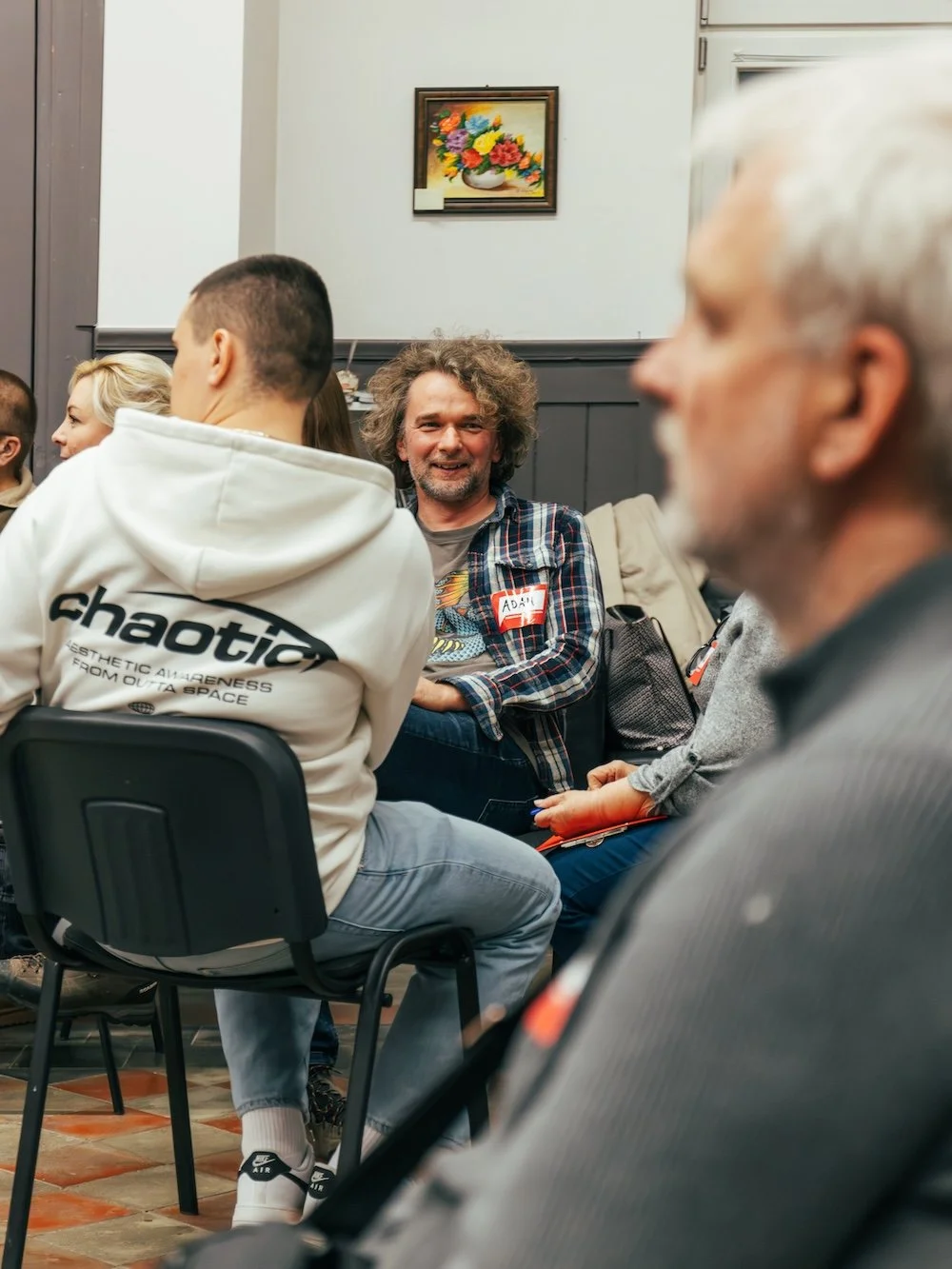
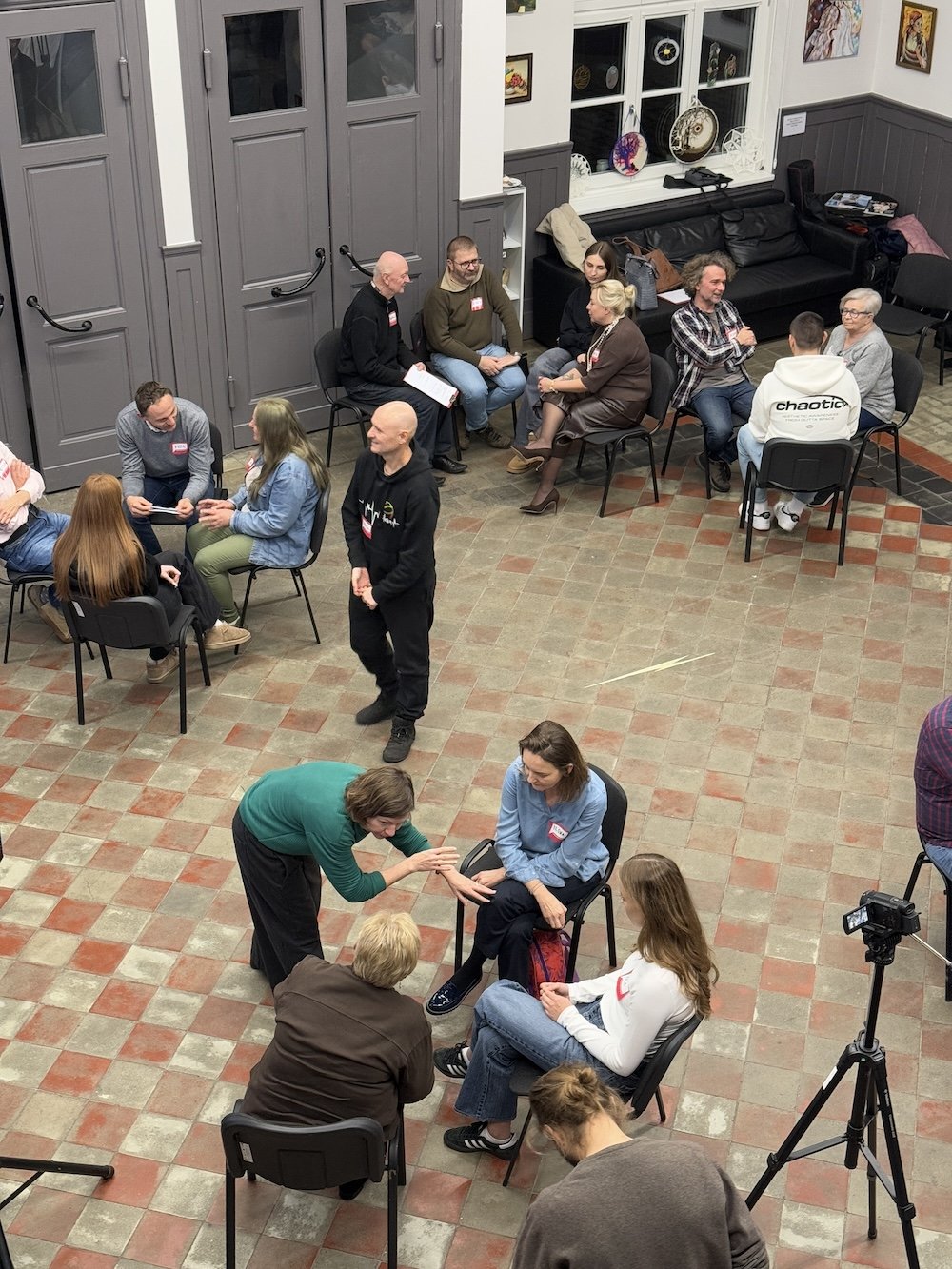
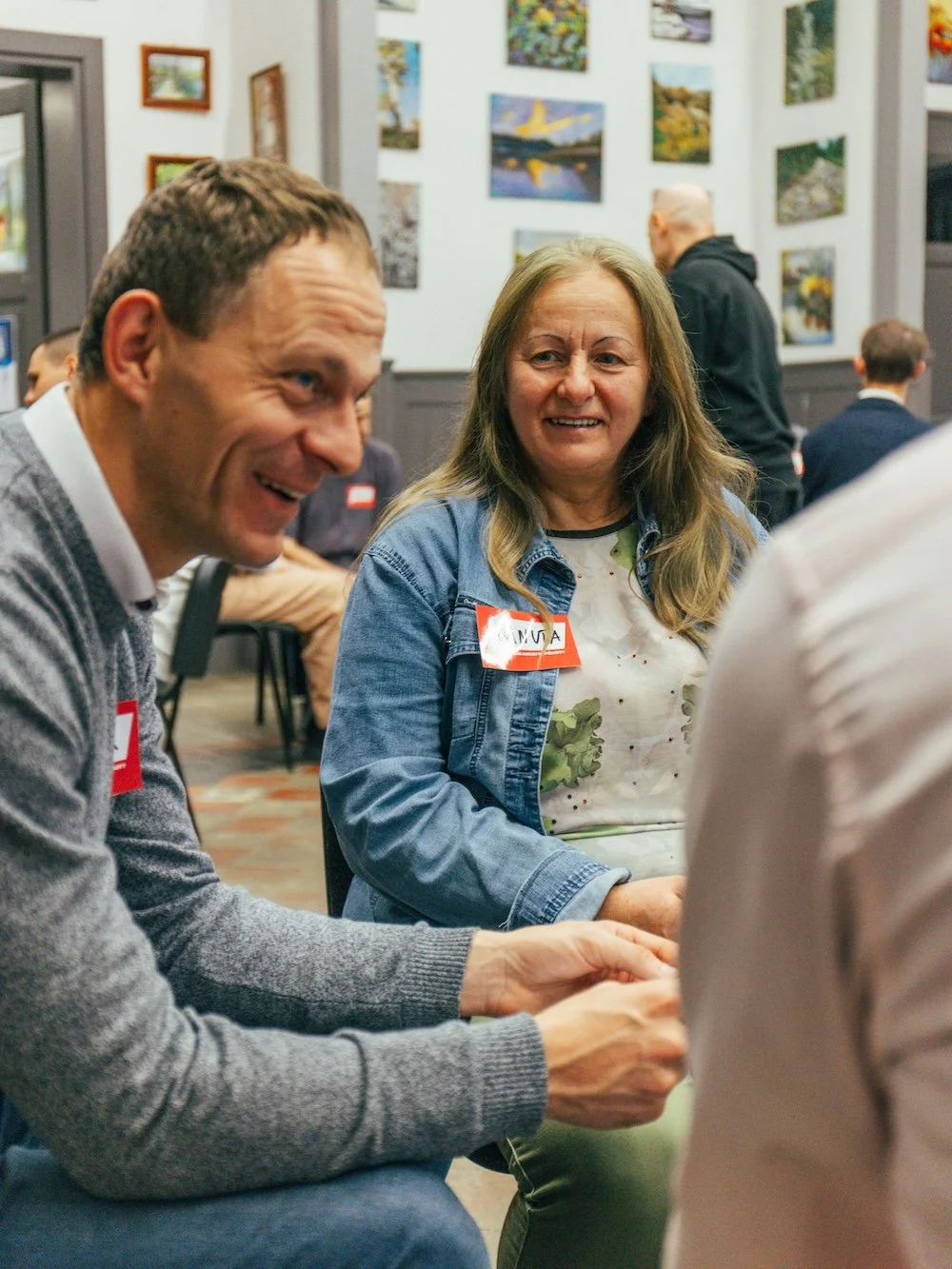
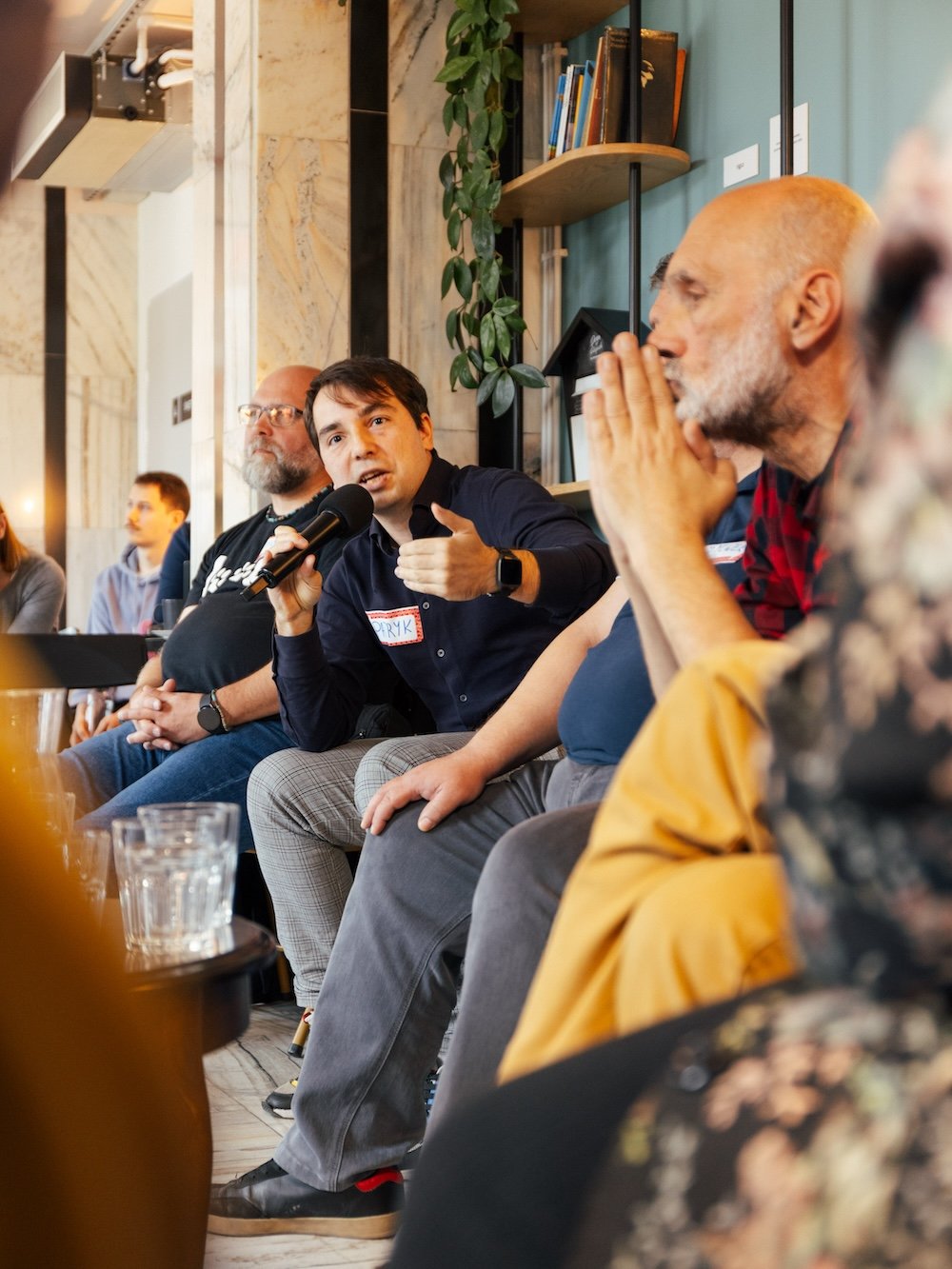
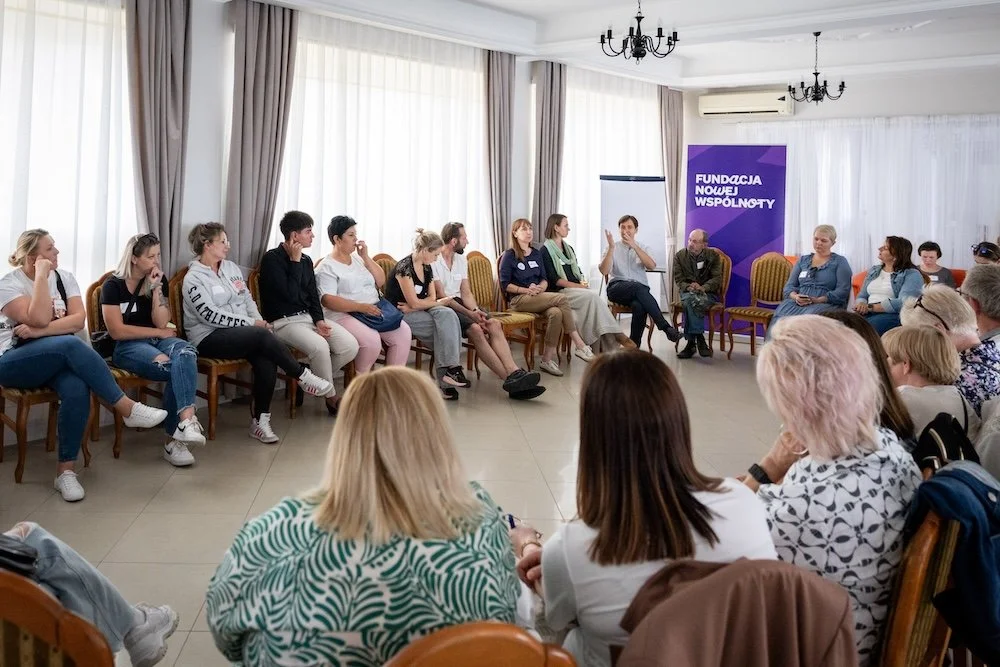
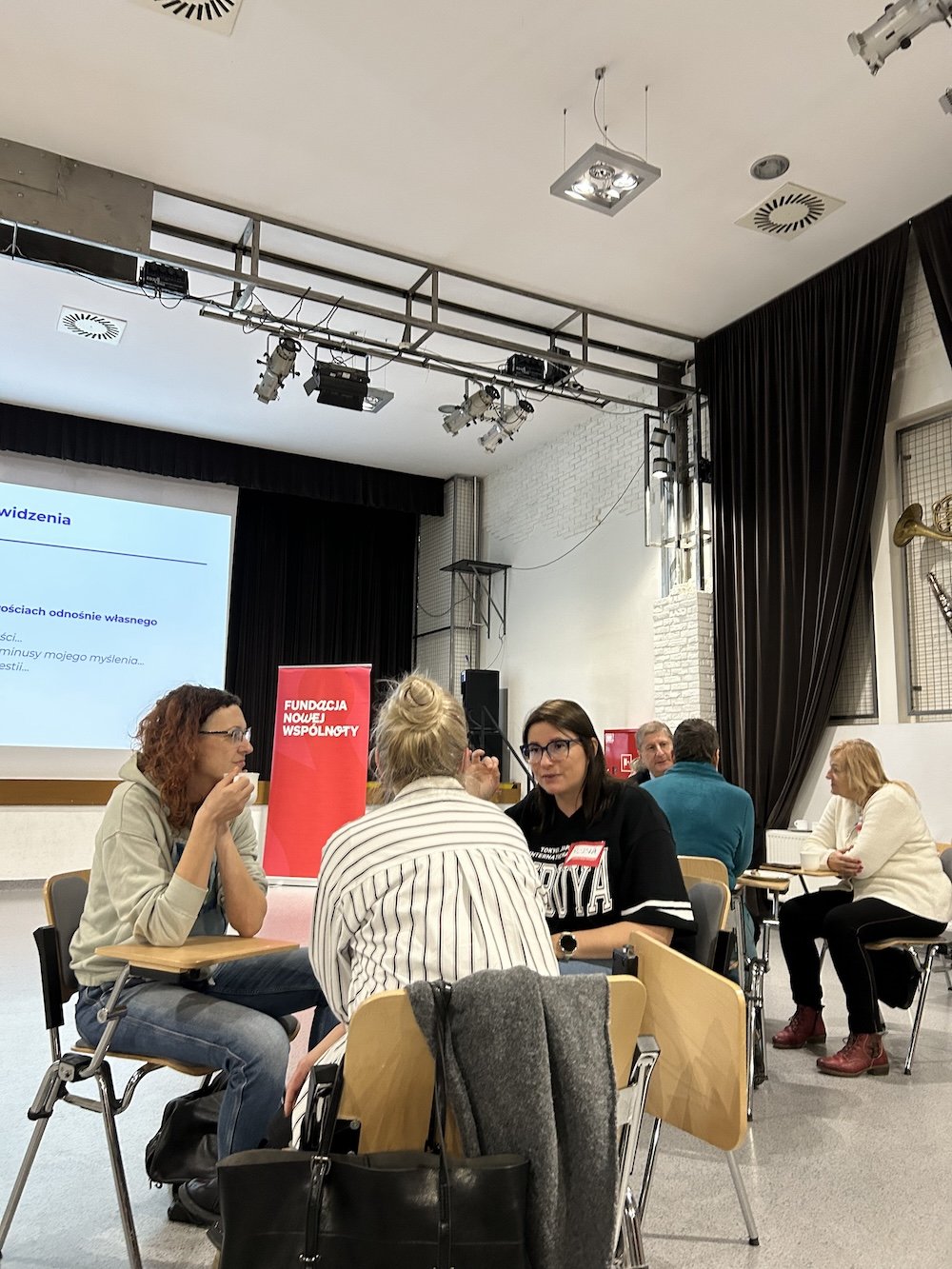
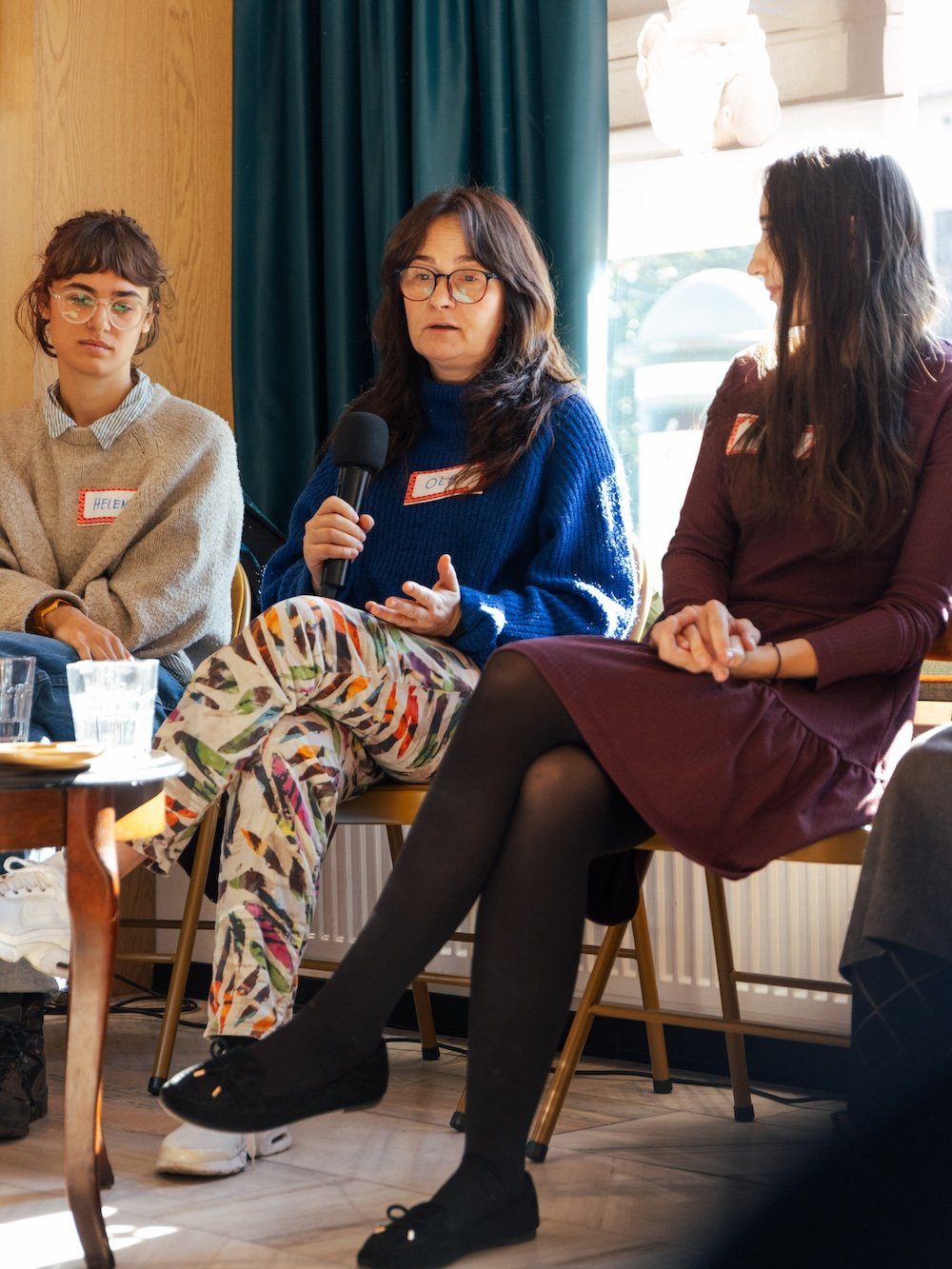
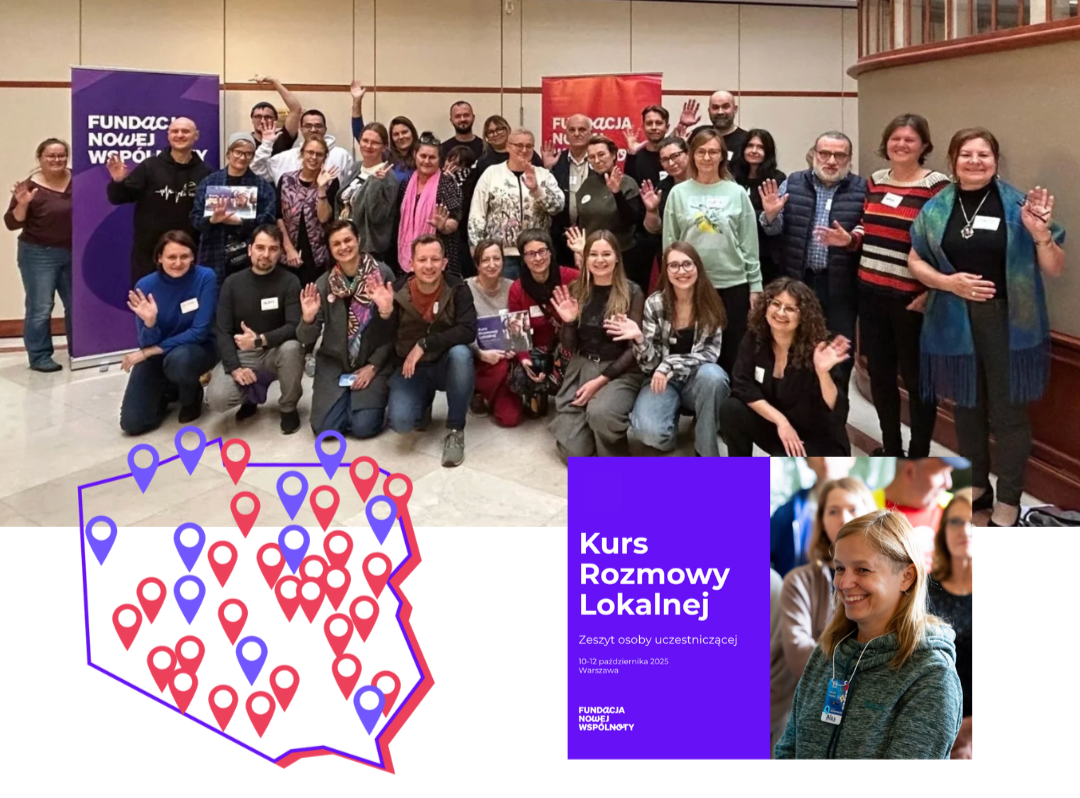
In 2025, we shared and spread the NCF method locally. 29 local activists and community leaders from different regions of Poland — representing rural organizations, local governments, libraries, church communities, and civic initiatives — took part in the first edition of our Local Dialogue Course.
They learned how to facilitate conversations on divisive topics in small communities and how to independently organize a simplified dialogue: the Good Local Conversation. Within a month of the course completion, they went on to hold nine such GLCs (marked in violet on the map, with pink representing NCF dialogues).
Dialogues Between Women and Men
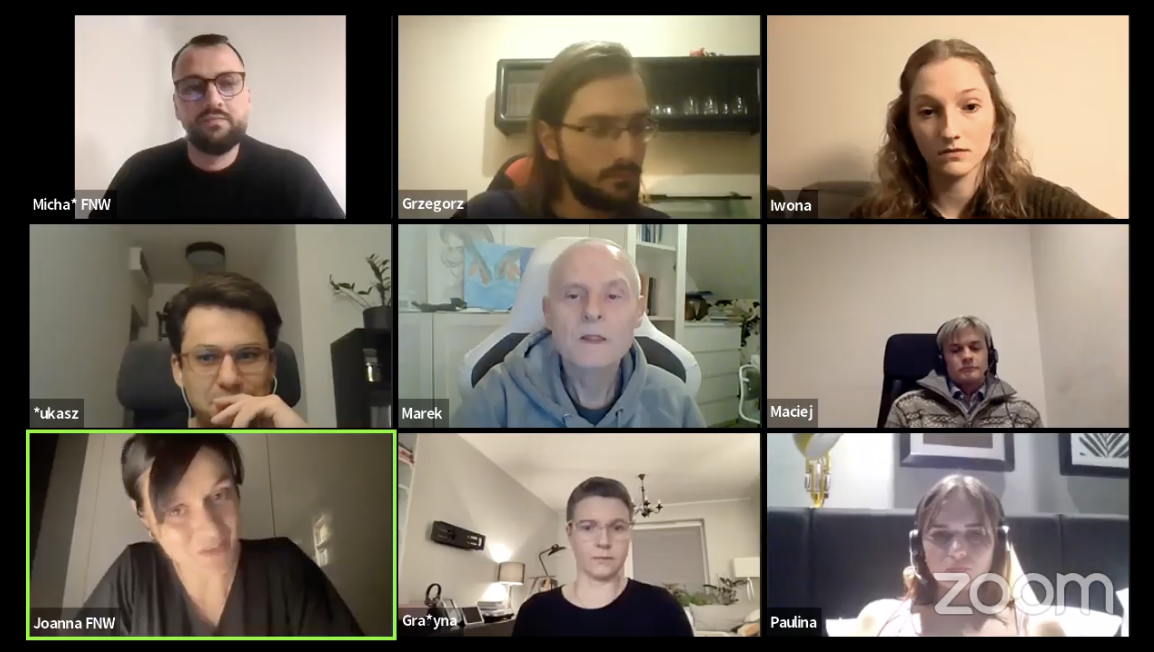
In the spring of 2025, we took on the topic of equality and gender. 55 participants from across Poland took part in conversations about what most deeply divides women and men in Poland. Five online dialogues focused respectively on social roles, work, money and earning, parenthood, and running a household. This project will continue — in 2026, we are launching a series of dialogues and Good Conversation Trainings for men.
Post-Election Dialogue 2025
In response to heightened political emotions, three days after the second round of Poland’s presidential election we organized a conversation between supporters of both leading candidates. 13 participants from across Poland spoke openly about their joy over Karol Nawrocki’s victory and their concerns following Rafał Trzaskowski’s defeat. The online livestream was watched by dozens of viewers, and is available on YouTube.
State of Polarization in Poland 2025
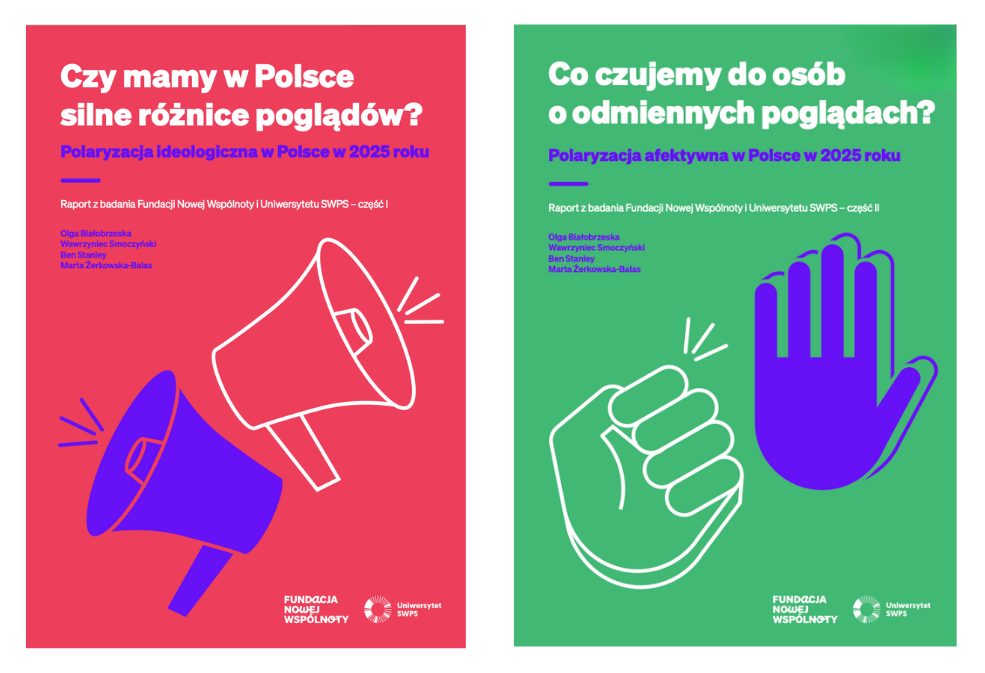
In 2025, we conducted a comprehensive study of polarization in Poland, a central focus of the NCF. Together with SWPS University, we carried out a social survey on a representative sample of 2,351 people, and subsequently produced three reports on ideological polarization, affective polarization, and perceived polarization in Poland (the last of which will be published in 2026). The findings received wide media coverage and form the basis for our subsequent work.
Public Dialogues at Warsaw’s Modern Art Museum
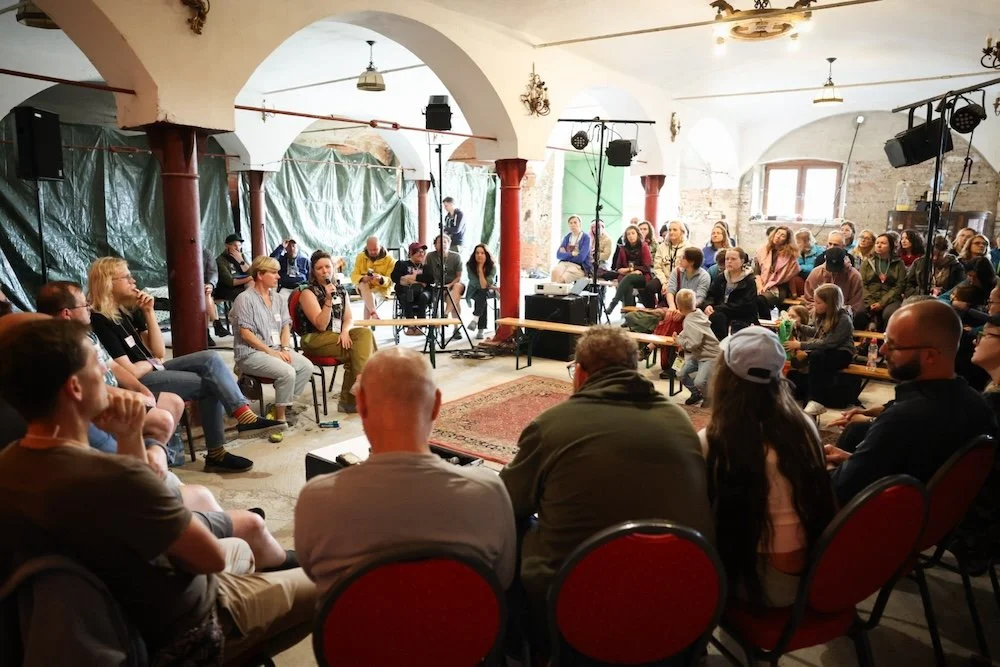
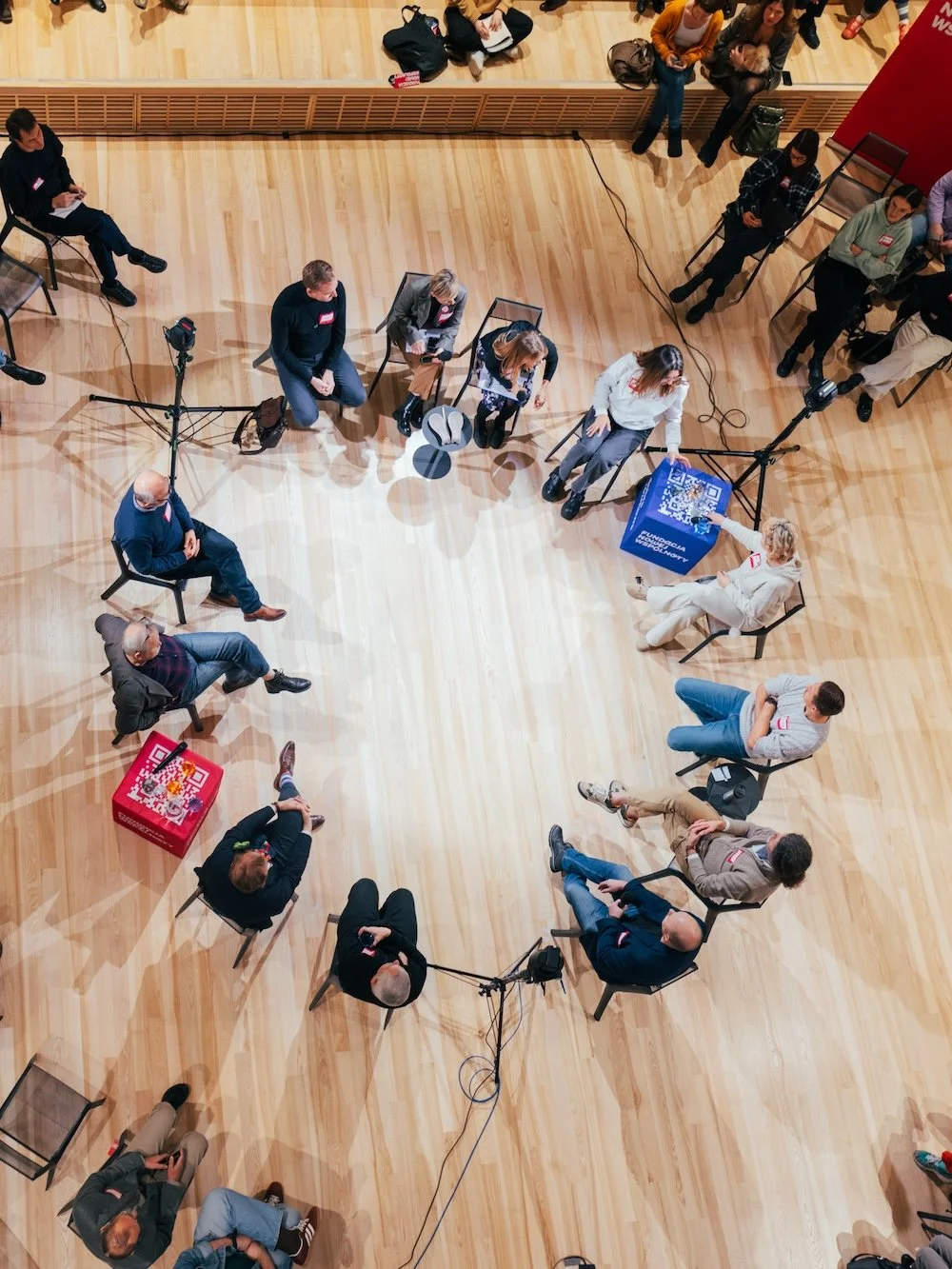
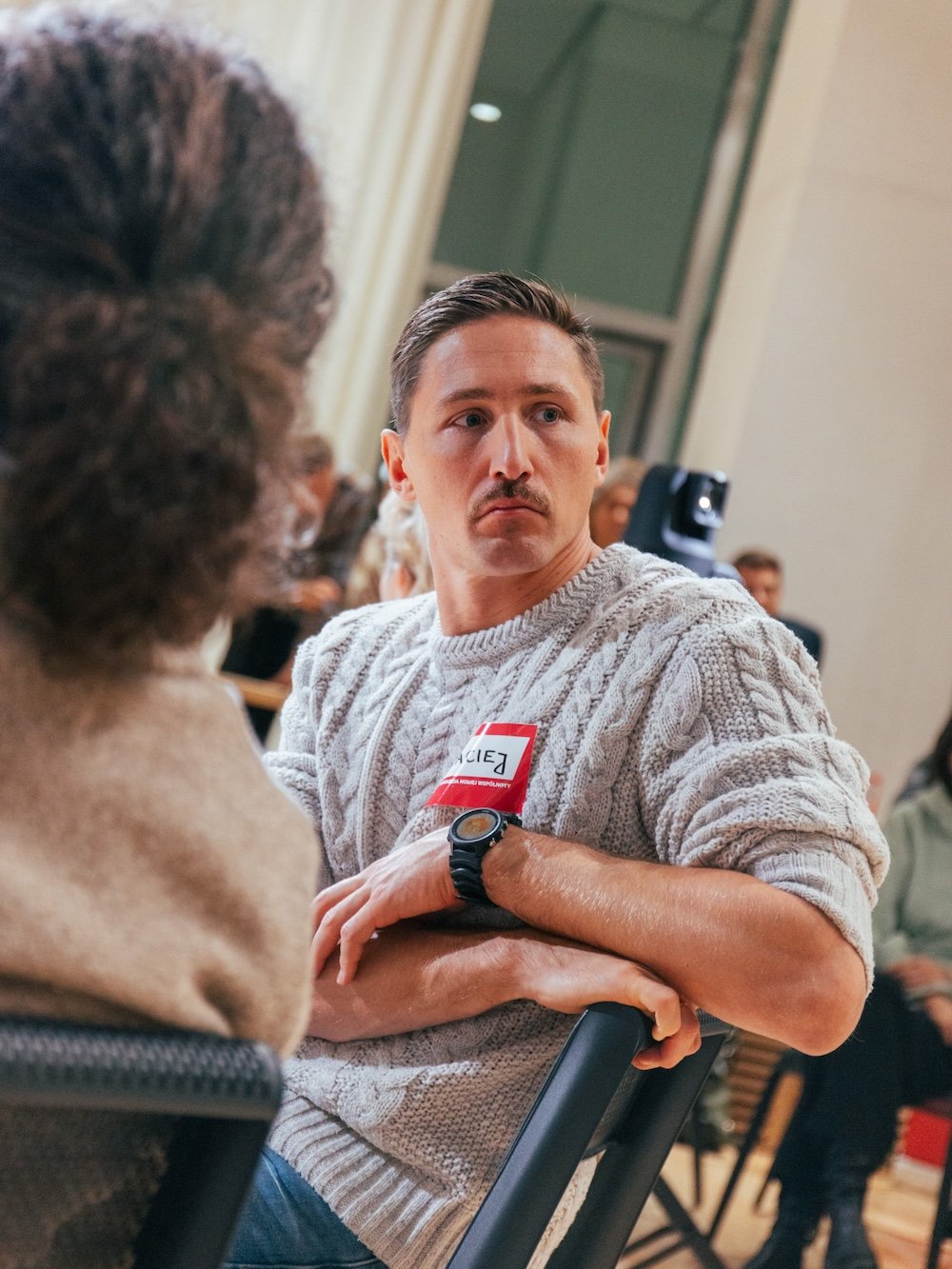
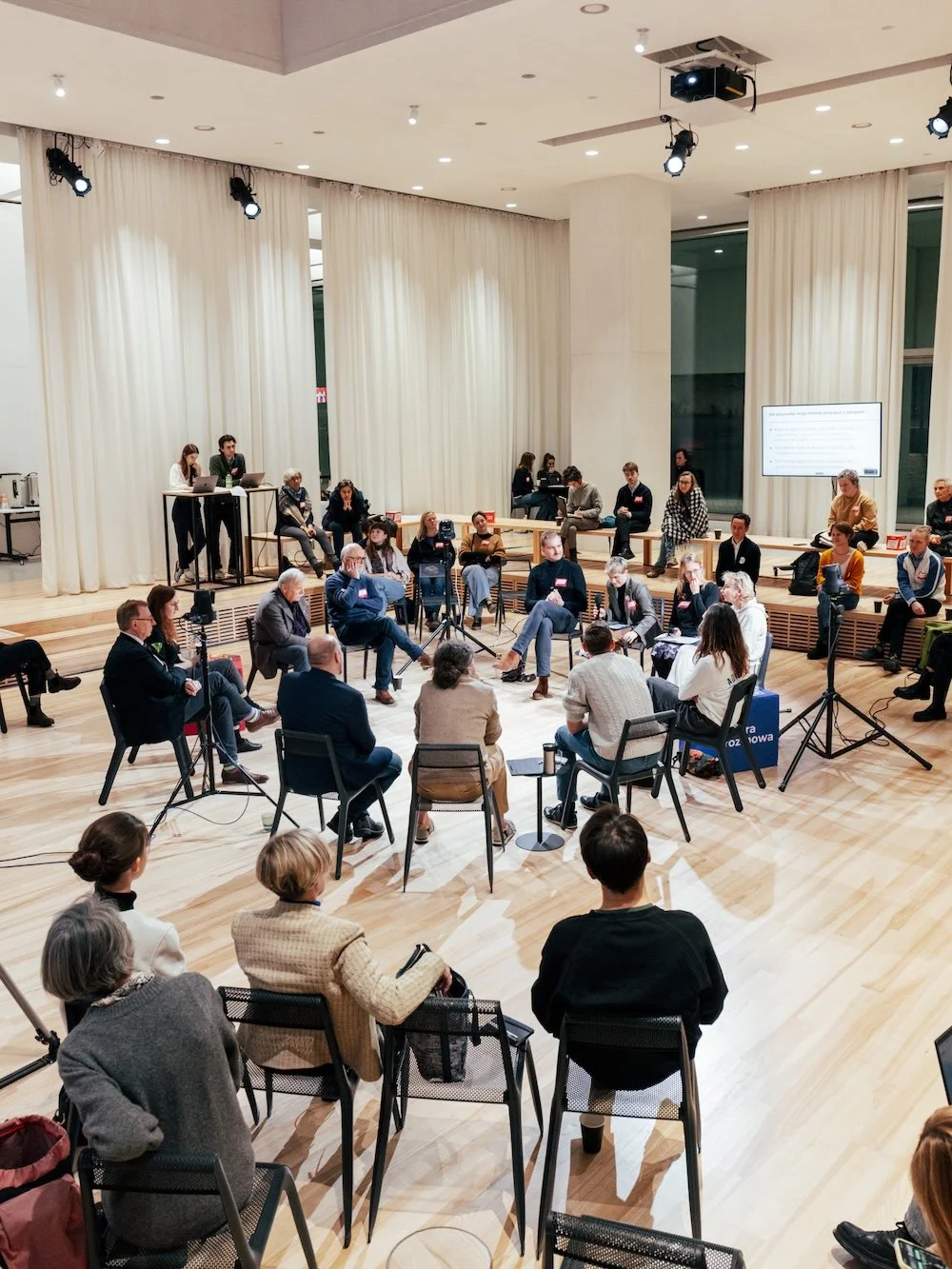
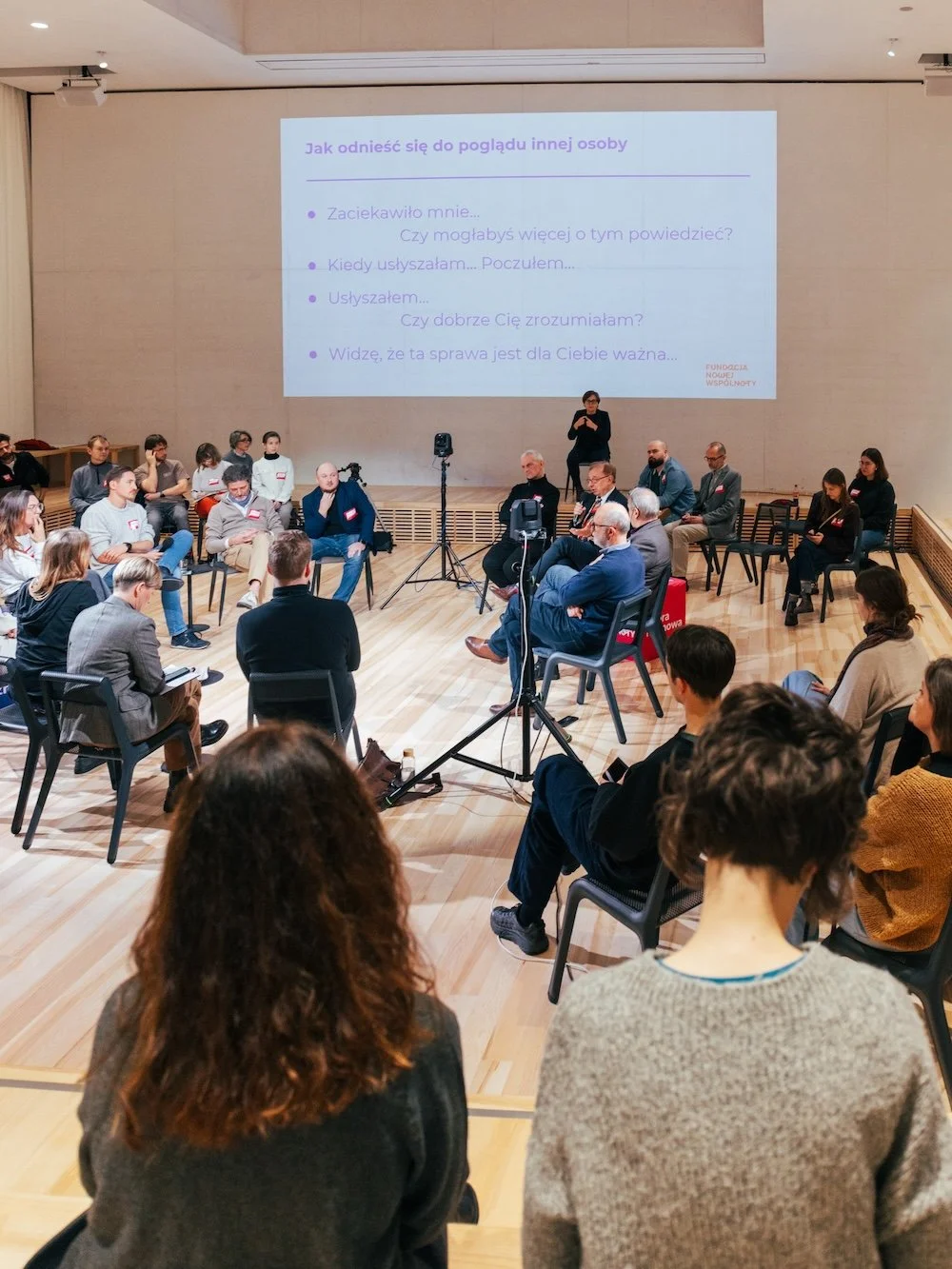
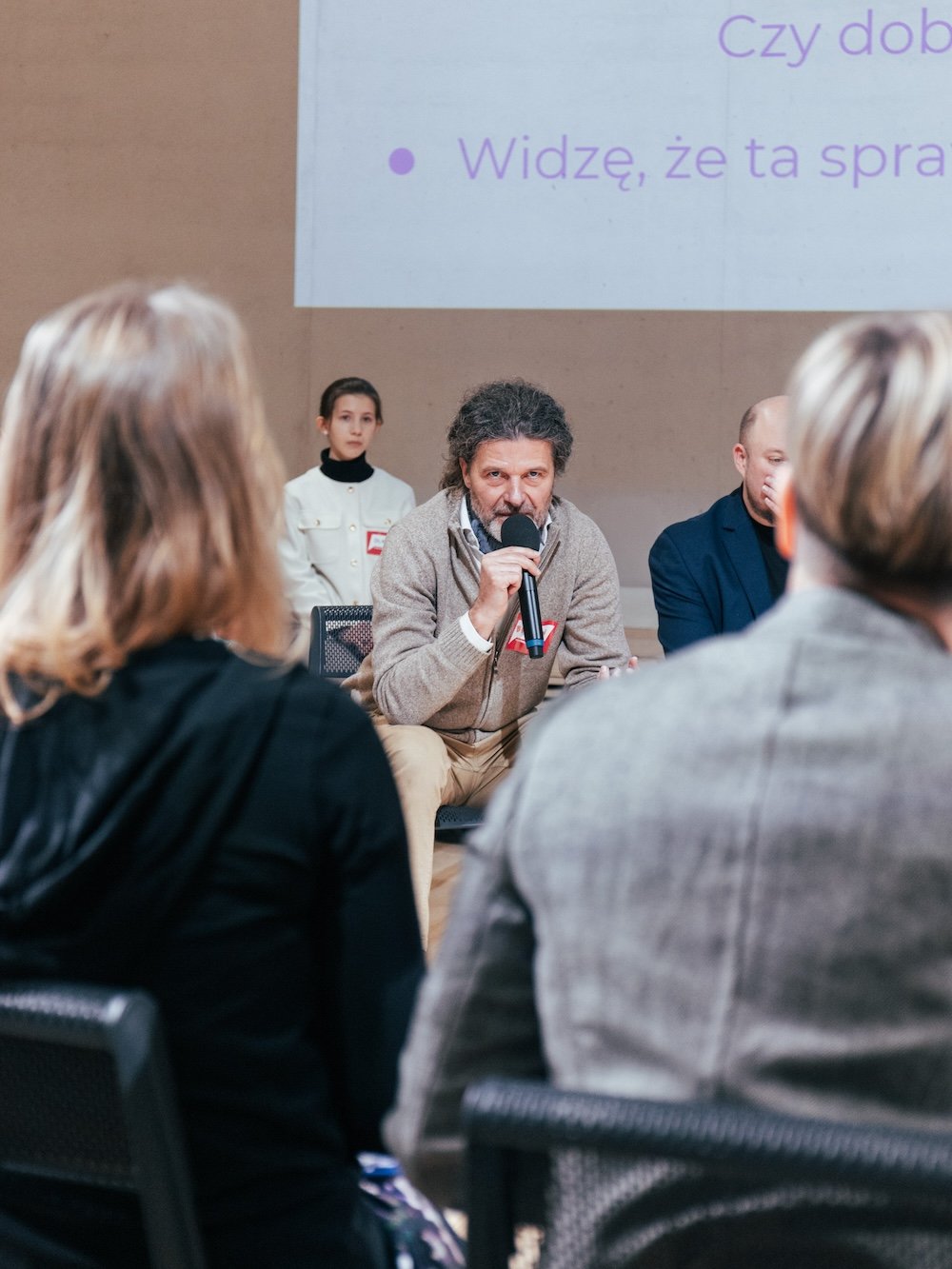
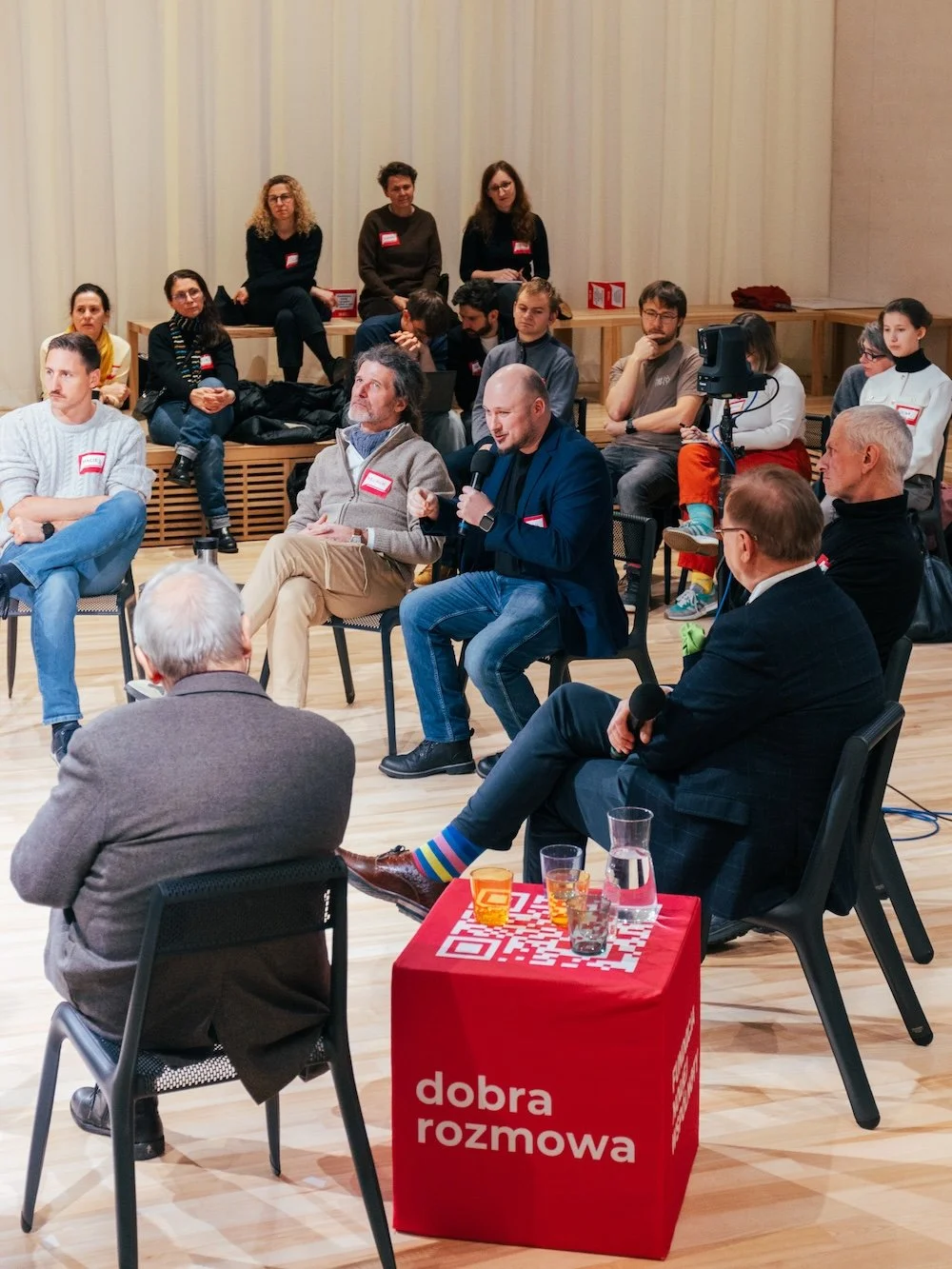
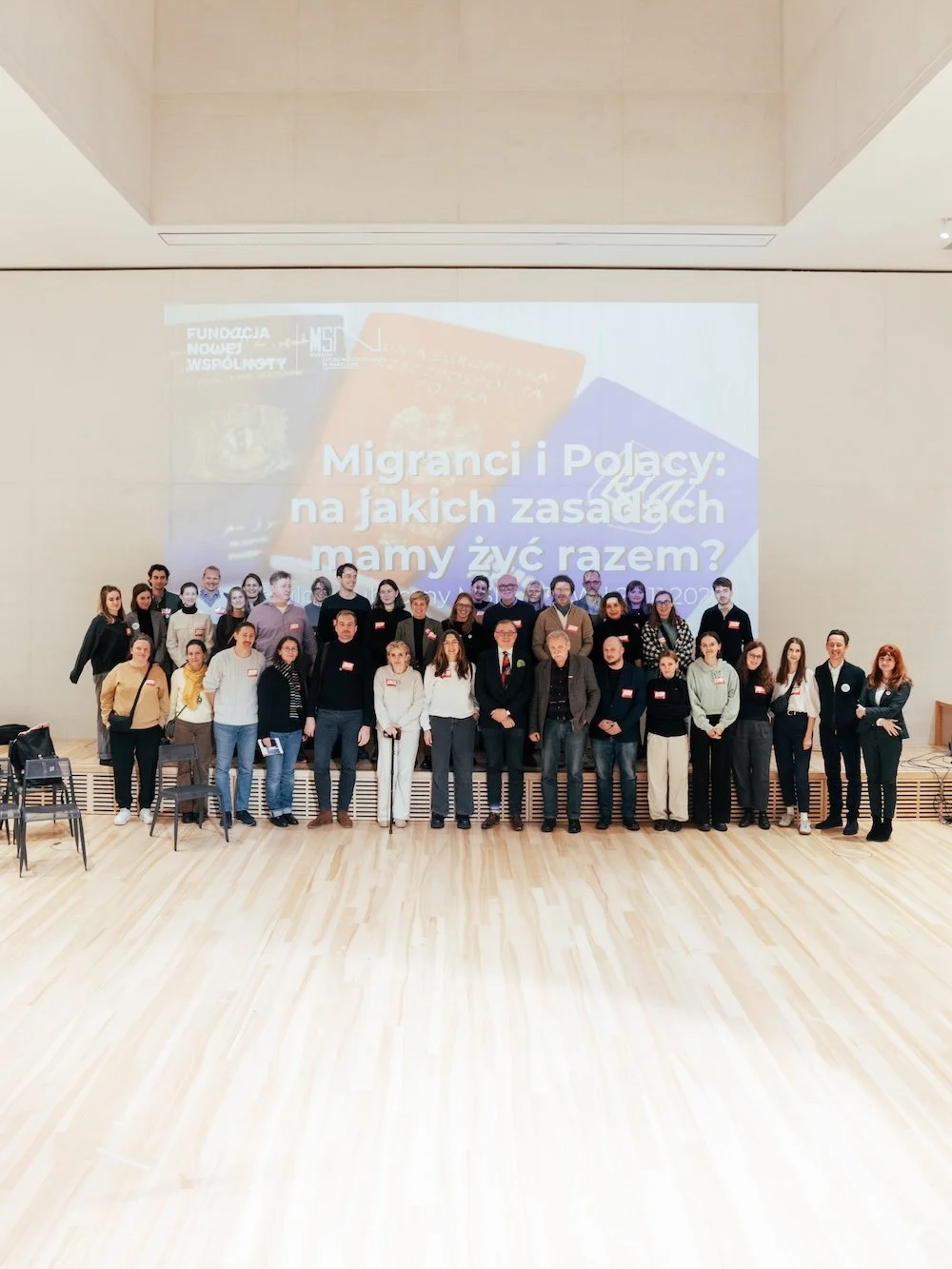
In 2025, we achieved something we had long dreamed of — dialogues with a live audience. In July, for the first time at the Slot Art Festival in Lubiąż (northern Poland), and from autumn onwards in Warsaw. Thanks to our collaboration with the Museum of Modern Art, we were able to invite dozens of participants to take part in two dialogues — on fear of war and on immigration to Poland. The conversations took place in the MSN auditorium, were recorded in HD quality, and are available on YouTube. A third dialogue at the museum is coming up — in February we will discuss feminism, and we also have further joint plans with the museum for 2026.
“Calm Christmas” Campaign
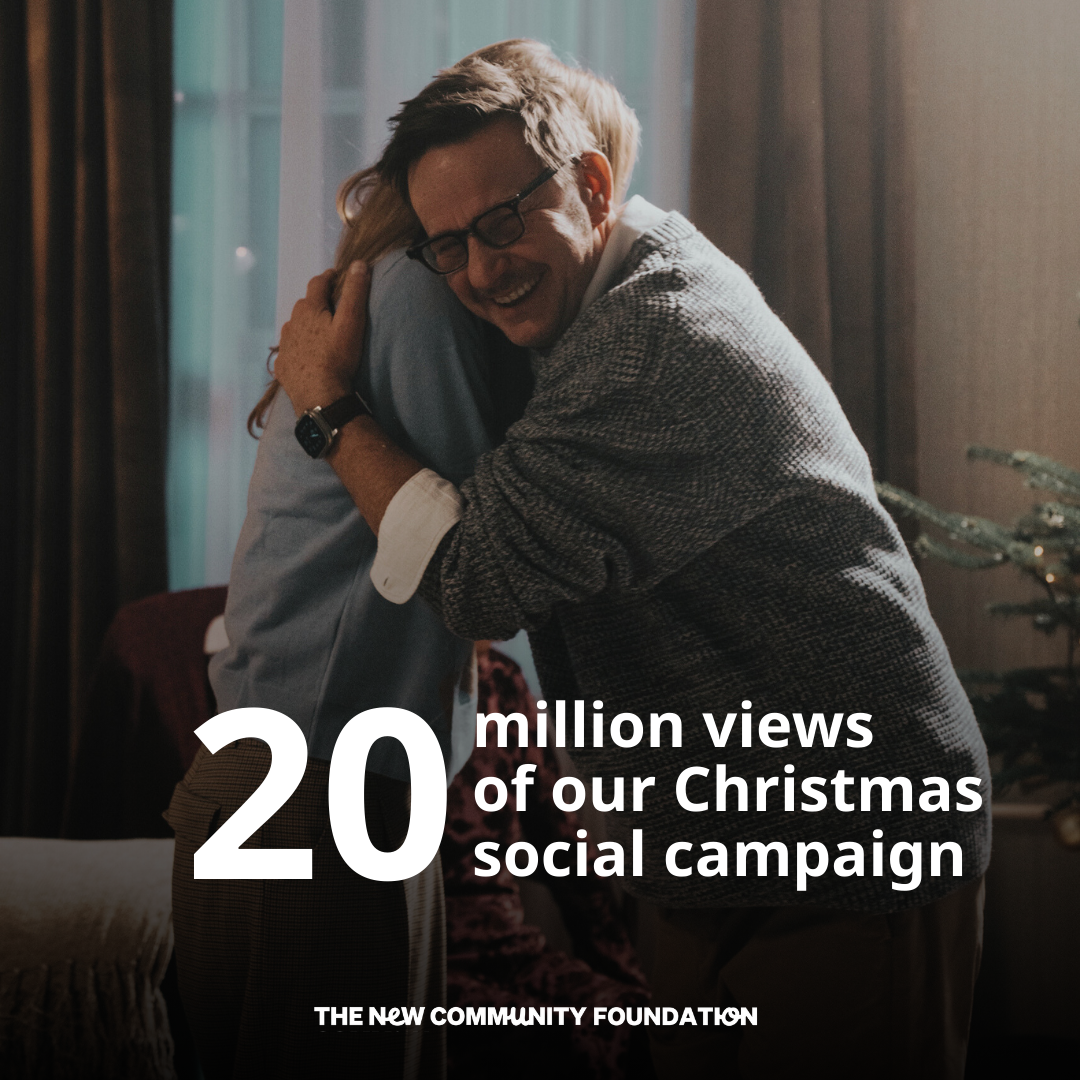
In December 2025, we ran a nationwide social campaign on how to handle conversations with family members holding different political views. Our ad, featuring Bartłomiej Topa and Katarzyna Herman – two leading actors from Poland’s most popular Netflix show – went viral on social media.
The campaign, ran in partnership with the PZU Foundation, was aired on television, trains across Poland, and public transport in 11 cities. Its key element was a set of Christmas family cards, packed with practical tips for talking to relatives. The campaign reached over 20 million views, an increase of 40% from the 2024 edition.